
Best starting point for airport-oriented industrial property: Ontario, California. Best fit for freeway-dependent truck yards: Fontana. Best fit for a civic-oriented office sale: Riverside. Best fit for rail-adjacent industrial property: San Bernardino. These are property-fit recommendations for your 2026 selling plan, not a ranking of sale prices or selling speed.
- The best Inland Empire cities to sell commercial property depend on your building, permitted use, and likely buyer.
- Ontario, California, belongs on the shortlist for industrial properties with a genuine airport connection.
- Fontana fits a truck-yard discussion only when zoning, access, and operating permissions support the use.
- Javierbrown serves Inland Empire commercial property owners evaluating a sale or lease.
Why this matters
You cannot move your building into a better market. You can position it for the right buyer, fix gaps in the property file, and choose between selling and leasing before committing to a listing strategy.
Javierbrown is a fit for Inland Empire owners seeking commercial property sales and leasing representation. Start with Javierbrown if you need to evaluate both paths rather than assume a sale is the answer.
A city name is a starting point, not a valuation. An occupied warehouse, a vacant office, and an unimproved parcel in the same city require different evidence and different selling plans.
What makes the best city for your commercial property sale?
Use these criteria before treating any city as the strongest choice:
- Buyer fit: Identify whether the property serves an owner-user, an income investor, or a developer. Each needs different evidence.
- Legal use: Match the advertised use to zoning, permits, recorded restrictions, and applicable approvals. A neighboring use proves nothing about your parcel.
- Functional access: Check entrances, turning movements, street restrictions, parking, loading, and access rights. Map distance is not operating access.
- Income quality: Review the lease, amendments, payment history, expense obligations, and tenant rights before marketing an occupied property.
- Comparable evidence: Separate completed sales from asking figures, and compare properties with similar use, condition, occupancy, and transaction terms.
- Seller outcome: Decide whether you want to exit ownership, retain income, or release capital while keeping another property. The marketing plan should serve that decision.
For a 2026 listing, keep current property facts separate from expectations. A proposed use, expected lease renewal, or planned improvement is not an existing asset until the supporting conditions are satisfied.
Inland Empire seller shortlist at a glance
| City | Best for | Standout location feature | Key limitation |
|---|---|---|---|
| Ontario, California | Airport-oriented industrial property | Ontario International Airport | Airport proximity does not establish suitability for a specific operation |
| Fontana | Freeway-dependent truck yards | Access planning around Interstate 10 and Interstate 15 | Truck parking and outdoor storage require parcel-specific verification |
| Riverside | Office property serving civic-related users | County-seat location | A civic address does not establish demand for your building |
| San Bernardino | Rail-adjacent industrial property | Established rail infrastructure | Nearby tracks do not establish usable rail service |
The table ranks fit by use case. It does not establish which city produces the highest proceeds, receives the most offers, or closes fastest.
1. Ontario: best for airport-oriented industrial property
Ontario, California, is the first city to examine when your industrial property's selling story genuinely involves Ontario International Airport. That connection belongs in the listing only when the building's layout and operating characteristics support the buyer's business.
Separate airport proximity from airport usefulness. Loading, vehicle access, permitted operations, and the building's physical condition still determine whether a buyer can use the property as intended.
Ontario pros:
- Ontario International Airport provides a concrete location reference for an airport-oriented industrial offering.
- An owner-user listing can focus on the building's operating utility rather than a general city description.
- An occupied property can be presented through its lease and income records, with location as supporting context.
Ontario cons:
- A nearby airport does not resolve loading, power, access, or zoning limitations.
- An industrial location narrative does not establish the best strategy for an office or retail property.
Best for: Owners whose industrial property has a documented operational connection to airport-related activity.
For your 2026 listing package, include a clear access map and verified building information. The guide to Inland Empire markets for logistics tenants provides a related lens when evaluating the property's leasing alternative.
Verdict: Hold the asking-price decision until relevant completed sales and property limitations are reviewed.
2. Fontana: best for freeway-dependent truck yards
Fontana belongs on the shortlist for a truck-yard sale when the parcel's actual access supports a freeway-dependent operation. Interstate 10 and Interstate 15 are useful regional reference points; the route between the freeway and the gate needs its own review.
Do not market a paved lot as an approved truck yard simply because trucks already park there. Establish what the parcel permits and whether existing approvals support the operation you intend to advertise.
Fontana pros:
- Freeway connections provide a specific starting point for access analysis.
- Gate placement, usable yard area, and circulation give buyers concrete features to evaluate.
- Documented operating approvals help distinguish an authorized yard from a speculative use.
Fontana cons:
- Street restrictions and turning movements can undermine apparent freeway convenience.
- Existing occupancy does not establish that truck parking, maintenance, or outdoor storage is authorized.
Best for: Owners of legally usable truck-yard or outdoor-storage property with verified access.
Before setting your 2026 marketing strategy, assemble the zoning information, applicable permits, survey, and access documents. Describe unresolved issues plainly rather than passing them to the buyer as assumptions.
Verdict: Skip the truck-yard positioning unless permitted use and practical access support it.
3. Riverside: best for civic-oriented office property
Riverside is the county seat of Riverside County. That makes civic-related location needs a sensible use case to investigate when selling an office property, without assuming that a government address creates demand for every nearby building.
The office itself still needs to work. Parking rights, accessibility, layout, building systems, and permitted occupancy belong ahead of broad claims about the city.
Riverside pros:
- County-seat status provides a factual location reference for relevant office buyers.
- A vacant building can be evaluated around an owner-user's occupancy requirements.
- A leased building can be presented through its actual income and tenant obligations.
Riverside cons:
- A civic-oriented location does not establish the suitability of a particular floor plan.
- Deferred repairs, parking constraints, and existing lease rights remain property-level obstacles.
Best for: Office owners whose location and building configuration fit buyers with a demonstrated need for Riverside access.
For a vacant office, document what stays, what needs repair, and which spaces a buyer can occupy. For an occupied office, explain possession through the lease rather than promise that the property can be delivered empty.
Verdict: Hold broad investment claims until the building's occupancy, expenses, and lease rights are clear.
4. San Bernardino: best for rail-adjacent industrial property
San Bernardino has established rail infrastructure. For an industrial seller, that creates a location characteristic to investigate—not permission to describe every nearby parcel as rail-served.
A rail-adjacent property and a property with usable rail service are different offerings. Verify physical connections, access rights, and service arrangements before making rail capability part of the sales pitch.
San Bernardino pros:
- Rail infrastructure provides a concrete location factor for relevant industrial buyers.
- Verified service arrangements can be documented separately from general proximity.
- A clearly defined industrial use keeps the listing focused on operational fit.
San Bernardino cons:
- Tracks near the property do not prove that the buyer can obtain rail service.
- Industrial buyers still need satisfactory truck access, utilities, condition, and permitted use.
Best for: Industrial owners with documented rail-related utility or a location that meets a specific buyer's operating requirements.
For a 2026 sale, describe only the access and service rights the property actually carries. If rail is merely nearby, say so; do not turn a map feature into a building capability.
Verdict: Skip rail-served language unless the supporting rights and service details are verified.
How the cities are ranked
This shortlist uses location characteristics and distinct property use cases: airport-oriented industrial, freeway-dependent yards, civic-oriented offices, and rail-adjacent industrial. The criteria remain buyer fit, legal use, access, income quality, comparable evidence, and seller outcome.
The order is not a market-performance league table. Ontario is the opening recommendation for its assigned industrial use case, not a claim that every Ontario property outperforms properties elsewhere.
Prepare the property before choosing a listing strategy
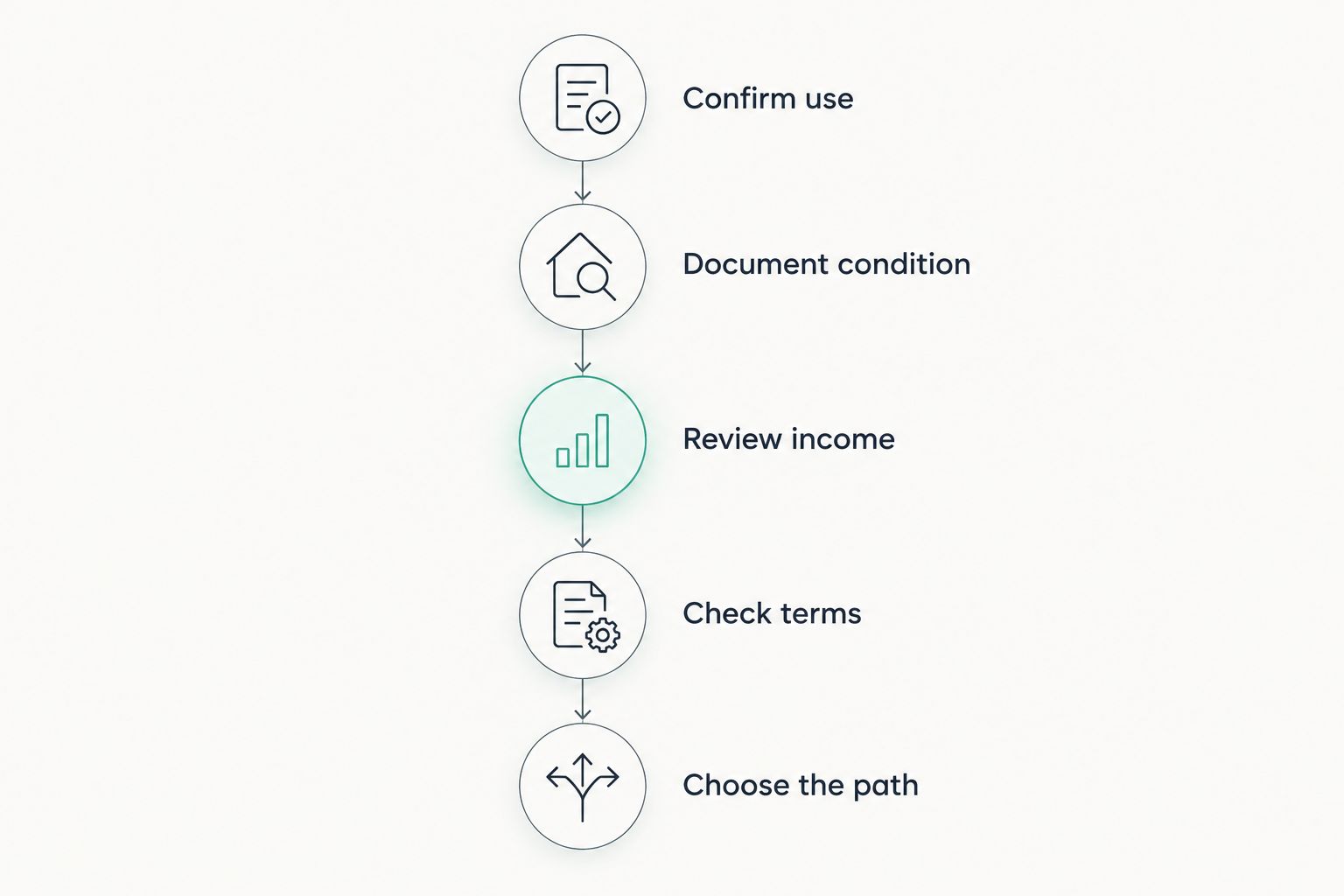
A useful selling plan starts with a file a buyer can verify. Follow this sequence before deciding how to position the property.
- Confirm use. Collect zoning information, permits, occupancy records, and relevant restrictions. Identify any proposed use that still needs approval.
- Document condition. Gather available inspection reports, repair records, and building information. Separate known defects from work you intend to complete.
- Review income. Prepare a trailing 12-month operating statement for an income-producing property. Reconcile it with leases, collections, and expenses rather than treating a rent schedule as cash received.
- Check terms. Review tenant rights, options, deposits, possession provisions, and any sale-related obligations. Have qualified counsel interpret disputed language.
- Choose the path. Compare selling with leasing against your ownership goals, carrying obligations, and willingness to remain a landlord.
The sequence matters because an unresolved use restriction or tenant right can change the buyer audience. Solve the positioning problem before spending effort on the listing description.
Keep tax planning alongside this preparation, not after the sale contract is settled. IRS like-kind exchange rules generally require replacement-property identification within 45 days after transferring the relinquished property and completion within 180 days, or the applicable tax-return due date if earlier.
Those deadlines concern qualifying exchanges, not ordinary listing timelines. Discuss eligibility, intermediary arrangements, and transaction structure with your tax and legal advisers before transferring the property.
Selling versus leasing: make the ownership decision first
A city ranking cannot decide whether you should remain a landlord. Compare the ownership consequences before choosing the marketing route.
| Option | Best for | Main advantage | Main drawback |
|---|---|---|---|
| Sell | Owners seeking an ownership exit | Ends ongoing ownership obligations after closing, subject to retained liabilities | Gives up future property income and control |
| Lease | Owners seeking to retain the asset | Keeps ownership while establishing contractual rental income | Retains landlord duties, vacancy exposure, and property risk |
Neither option removes the need for property-specific analysis. A lease proposal must account for expenses, improvements, permitted use, and tenant obligations; a sale proposal must account for financing conditions, inspections, possession, and closing requirements.
Javierbrown provides commercial property sales and leasing representation, so the initial discussion can address both paths. The recommendation should follow your objective and property facts, not a predetermined preference for a sale.
Discuss your sale or lease
Review your Inland Empire property's buyer fit, preparation needs, and sale-versus-lease decision.
Which city should guide your selling plan?
Start with Ontario for an airport-oriented industrial property; start with your property's actual use for everything else. Fontana's yard case, Riverside's office case, and San Bernardino's rail-adjacent case each need different supporting documents.
For an undecided seller, the next move is not to choose a city winner. Establish permitted use, identify the likely buyer, review comparable completed sales, and decide whether you want to exit ownership. That is the foundation of a defensible 2026 listing strategy.
FAQ
What's the best Inland Empire city to sell commercial property?
There is no single best city for every commercial property. Ontario, California, is a starting point for airport-oriented industrial property, while other locations require a different property-specific case.
Is Ontario, California, better than Fontana for an industrial sale?
Ontario and Fontana need to be compared against the property's use and buyer requirements. Airport-related operations call for a different access analysis than a freeway-dependent truck yard.
Can I advertise my Fontana lot as a truck yard?
Advertise a truck-yard use only when parcel-specific zoning, approvals, and operating conditions support it. Existing truck parking does not establish that the use is authorized.
Does a San Bernardino property near tracks have rail service?
Proximity to tracks does not establish rail service. Verify physical connections, access rights, and service arrangements before describing a property as rail-served.
Should I sell or lease my Inland Empire commercial building?
Sell when your objective is to exit ownership; evaluate leasing when you want to retain the asset and accept landlord responsibilities. Compare the property facts, proposed terms, and ownership consequences before choosing.
What should I prepare before listing a tenant-occupied property?
Prepare the executed lease, amendments, payment records, expense information, and documents affecting possession or tenant rights. Buyers need to understand both the income and the obligations they would acquire.
Will choosing the right city help my property sell faster in 2026?
A city name alone does not establish a selling timeline. Property condition, permitted use, asking terms, buyer financing, and contract requirements all need review before making a timing commitment.
One last thing
The strongest location claim is the one your documents support. Airport proximity, freeway access, a civic address, and nearby rail all sound useful; none replaces proof that a buyer can operate the intended business at your property.
Before your listing goes live, read every use and access claim as if you were the buyer's inspector. Remove the claims that rely on assumptions.