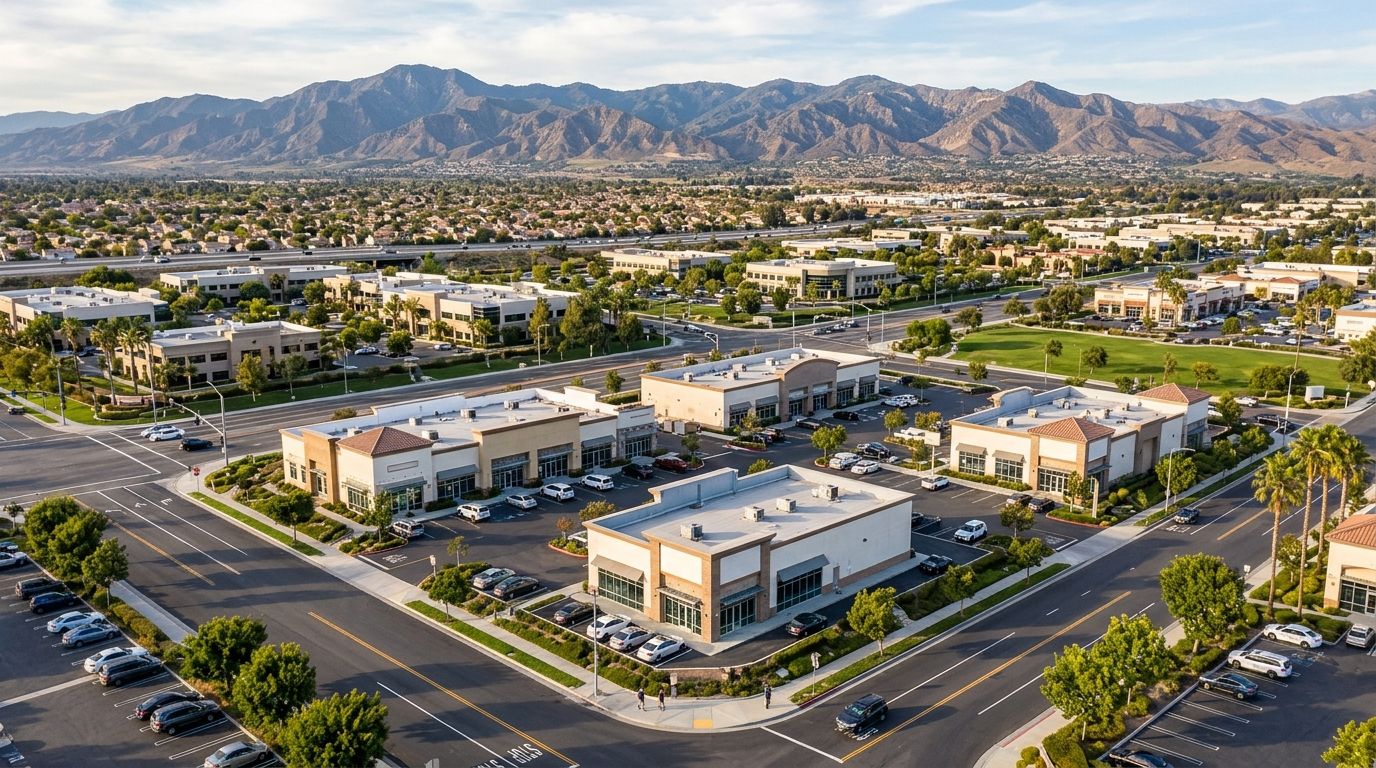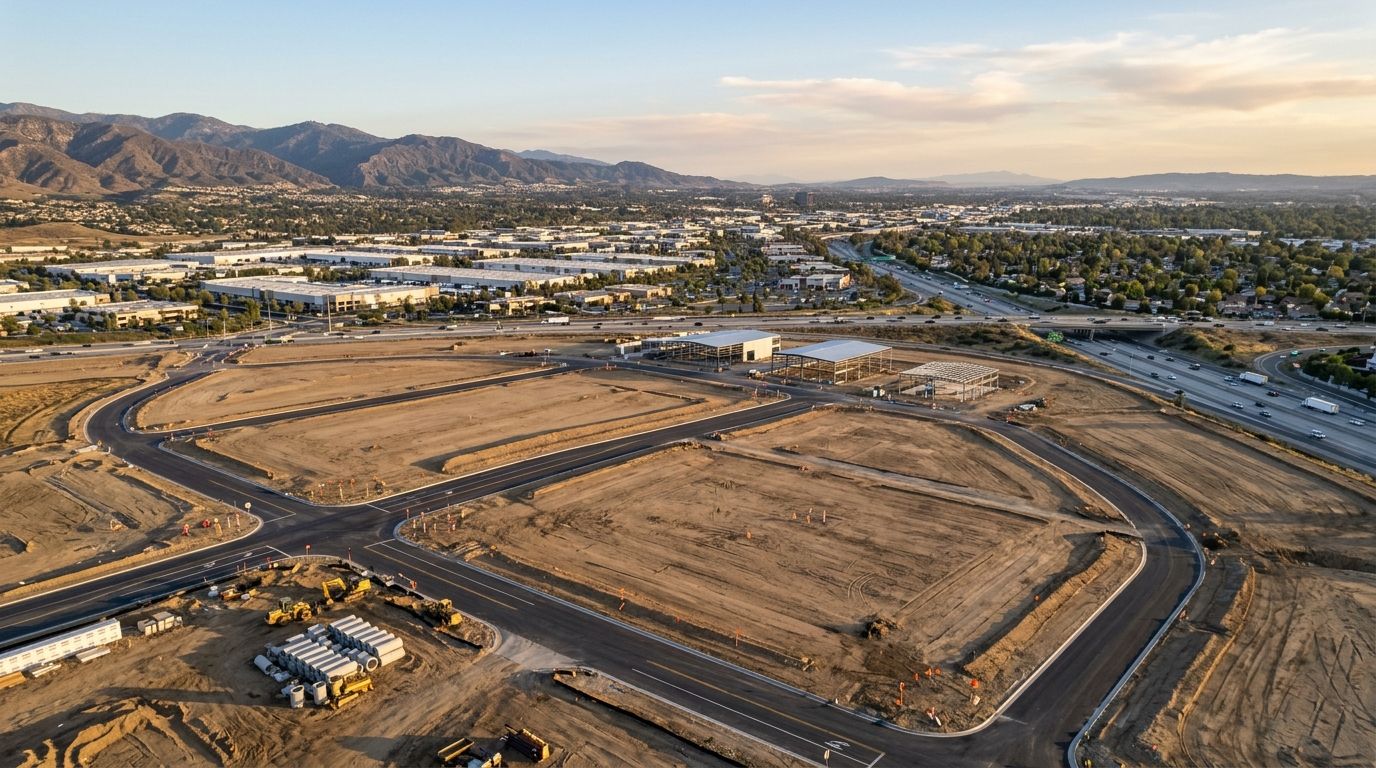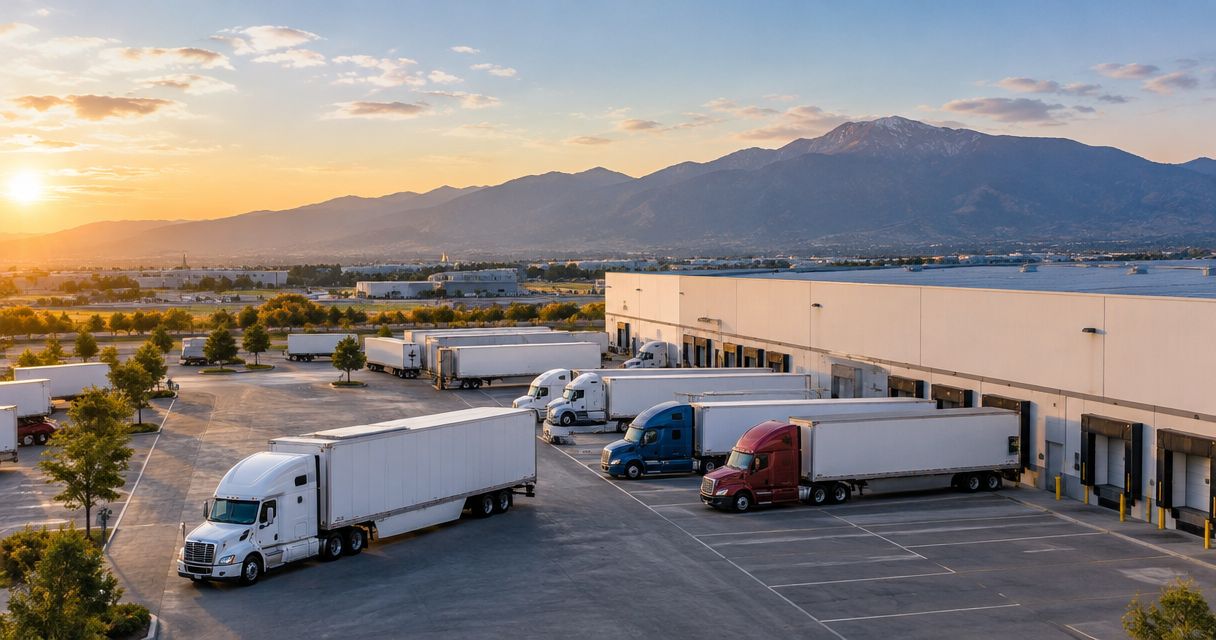
Best overall starting point: Ontario, California. Best for I-10/I-15 routing: Fontana. Best for an I-210-focused search: Rialto. Best for the I-10/I-215 interchange area: San Bernardino. Best for southern I-215 operations: Perris. This 2026 guide ranks search locations by transportation geography—not blanket permission to operate a truck yard.
- The best Inland Empire cities for truck yard and IOS leases depend on routes and parcel-specific approvals.
- Ontario, California, is the default starting point for an airport-area truck yard search.
- Fontana, Rialto, San Bernardino, and Perris serve different freeway corridors; compare actual dispatch routes.
- Javierbrown serves Inland Empire owners seeking commercial real estate sales and leasing representation.
Why this matters
A good city cannot fix a parcel that does not allow your tenant’s operation. Industrial outdoor storage, or IOS, describes a broad property category; trailer parking, equipment storage, container storage, and truck maintenance are different activities that need separate review.
For landlords, that distinction belongs in the listing strategy before tours begin. Market the documented use, not every use that fits behind the fence.
Javierbrown provides commercial real estate sales and leasing representation for Inland Empire owners and investors, including truck yard properties. Javierbrown is a fit for owners who want truck yard and IOS leasing representation in Ontario, California, and surrounding cities.
What makes the best truck yard and IOS location?
Use these criteria to evaluate the 2026 shortlist before comparing individual properties:
- Permitted operation: Confirm the exact activities, operating conditions, and approval status for the parcel.
- Route fit: Follow the trip from the gate to the customer, terminal, warehouse, or freeway—not just the freeway on a map.
- Physical usability: Check gate placement, turning space, surface condition, drainage, and usable storage area.
- Operating restrictions: Review hours, lighting, noise, screening, circulation, and any approval conditions.
- Lease responsibilities: Establish who handles approvals, repairs, surface maintenance, insurance, and restoration.
- Exit flexibility: Address assignment, renewal, early termination, and removal of tenant-installed improvements.
For an owner, these criteria also define the right tenant. A tenant whose operation matches the property’s documented limits is a better prospect than one who needs changes you have not agreed to fund.
Inland Empire truck yard locations at a glance
The ranking below is a route-based starting order for 2026. It is not a ranking of rents, vacancy, available inventory, or permit approval speed.
| City | Best for | Standout location feature | Key limitation |
|---|---|---|---|
| Ontario, California | Airport-area operations | Ontario International Airport and the I-10 corridor | Airport proximity does not establish permitted yard use |
| Fontana | I-10/I-15 routing | Access to the east–west and north–south freeway network | The gate-to-freeway route still needs review |
| Rialto | I-210-focused operations | Position along the northern freeway corridor | Northern access does not suit every dispatch pattern |
| San Bernardino | I-10/I-215 interchange-area operations | Connection between the two freeway corridors | Local truck access remains parcel-specific |
| Perris | Southern I-215 operations | Position farther south along I-215 | A poor match when daily trips concentrate farther north |
1. Ontario: best for airport-area truck yard searches
Ontario, California, is the default starting point when your operation needs proximity to Ontario International Airport or businesses along the I-10 corridor. Start here because of the destination pattern, not because an Ontario address guarantees a suitable yard.
For landlords, describe the actual gate location and access route. Avoid treating nearby airport infrastructure as proof that a property supports cargo handling, truck parking, or outdoor storage.
Ontario pros:
- Airport proximity is relevant for airport-connected operations.
- I-10 provides an east–west route through the area.
- A useful starting geography when customers cluster around Ontario.
Ontario cons:
- Airport proximity does not establish land-use permission.
- An attractive address does not resolve circulation or access problems.
Best for: Owners targeting tenants with airport-area destinations or Ontario-centered dispatch.
Verdict: Hold Ontario on the shortlist until the parcel’s permitted use and truck route are confirmed. Make it the first city you investigate when those destinations drive the business.
2. Fontana: best for I-10/I-15 routing
Fontana belongs near the top when operations depend on both east–west and north–south freeway travel. Its geography makes the I-10/I-15 routing question central to site selection.
Do not stop at a freeway-distance measurement. Trace the route from the property entrance, including turns, intersections, and restrictions affecting the intended vehicles.
Fontana pros:
- Relevant geography for operations using I-10 and I-15.
- A distinct alternative to an airport-centered search.
- A useful city to investigate when dispatch runs in multiple directions.
Fontana cons:
- Freeway proximity does not guarantee a practical truck approach.
- An industrial setting does not establish approval for outdoor storage.
Best for: Owners seeking tenants whose dispatch depends on the I-10/I-15 network rather than a single nearby destination.
Verdict: Hold Fontana for route verification. Keep it ahead of Ontario only when the actual trip pattern supports that choice.
3. Rialto: best for an I-210-focused search
Rialto deserves a separate search slot when the northern freeway corridor fits the operation. Evaluate it around I-210 access rather than treating it as interchangeable with cities farther south.
A landlord should connect the property’s location to a specific operating pattern. “Near freeways” says less than a clear explanation of the approved approach to the gate.
Rialto pros:
- Relevant to an I-210-oriented location search.
- Adds a northern corridor option to the comparison.
- Helps separate northern-route needs from southern I-215 needs.
Rialto cons:
- Northern positioning is not an advantage for every destination.
- Local approvals and street access still control suitability.
Best for: Owners positioning a property for tenants whose trips align with the I-210 corridor.
Verdict: Hold Rialto when northern access matters. Skip Rialto as a default choice if the tenant’s work is concentrated elsewhere.
4. San Bernardino: best for I-10/I-215 interchange-area operations
San Bernardino belongs on the shortlist when trips depend on the I-10/I-215 area. The city provides a different geographic starting point from Ontario’s airport-area focus or Perris’s southern position.
Evaluate the full approach to each parcel. A freeway interchange on the map does not tell you whether a loaded vehicle can use the intended local streets and entrance.
San Bernardino pros:
- Relevant geography for operations using I-10 and I-215.
- Offers an eastern comparison to an Ontario-centered search.
- Gives owners a clear corridor-based positioning angle.
San Bernardino cons:
- Interchange proximity does not establish suitable local truck access.
- Property condition and approval history require separate investigation.
Best for: Owners targeting tenants with dispatch tied to the I-10/I-215 area.
Verdict: Hold San Bernardino for tenants with a matching route pattern. Do not substitute a city-level recommendation for a parcel inspection.
5. Perris: best for southern I-215 operations
Perris is the southern I-215 option in this comparison. Start here when the business’s destinations make a southern location useful, rather than automatically beginning around Ontario.
For owners marketing a Perris yard in 2026, lead with the operation the property supports and the destinations it serves. Do not promise a northern-corridor advantage that the location does not deliver.
Perris pros:
- Relevant to operations centered farther south along I-215.
- Provides a clear geographic alternative to Ontario and Rialto.
- Supports a destination-led search rather than a city-name search.
Perris cons:
- Southern positioning works against a northern-heavy dispatch pattern.
- The address alone does not establish usable storage capacity.
Best for: Owners seeking tenants whose operating footprint fits southern I-215.
Verdict: Hold Perris when southern destinations drive the requirement. Skip it when the proposed tenant’s regular trips make the location impractical.
How this ranking works
This ranking uses the criteria above, with transportation geography determining each city’s distinct role. Permitted use, physical fit, and lease terms then determine whether a particular property stays on the shortlist.
The best city is the one that fits the operation; the best parcel is the one that can lawfully support it. None of these rankings establishes permission, property condition, or suitability for a specific tenant.
Screen the parcel before negotiating the lease
Use a consistent process for your 2026 search or listing preparation. Keep the operation, property condition, and lease obligations connected throughout the review.
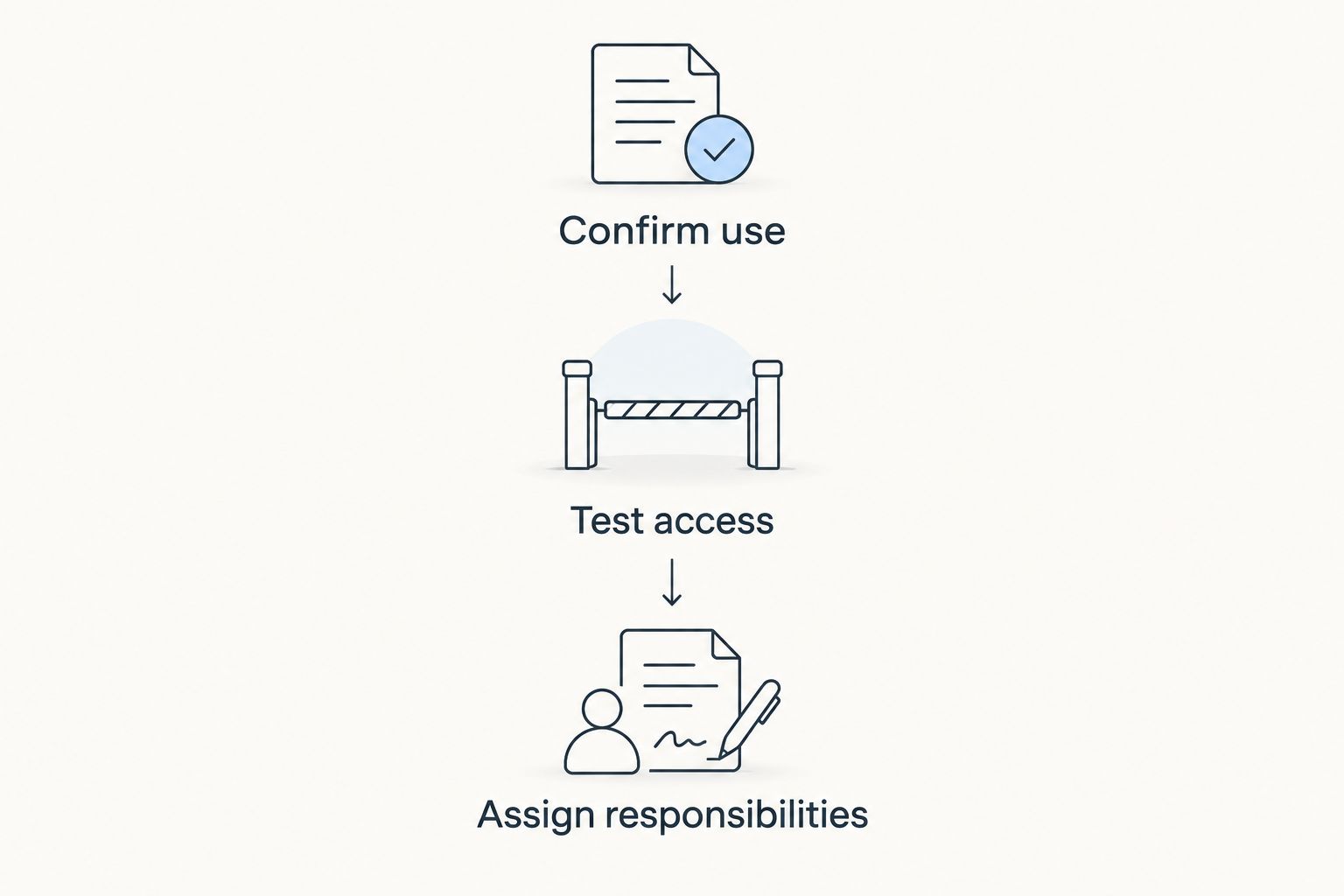
Confirm use
Request 3 document groups: applicable land-use approvals, a site plan showing the proposed operation, and existing lease documents if the property is occupied. Ask the relevant planning authority about the exact proposed activities rather than asking only whether “IOS is allowed.”
Distinguish parking from maintenance, fueling, washing, loading, and material storage. Do not assume approval for one activity covers the others.
Test access
Compare 2 routes for each serious candidate: the intended truck approach and an alternative approach. Verify applicable truck restrictions and inspect how vehicles enter, circulate, queue, and leave.
Assess the usable yard, not just the parcel boundary. Buildings, setbacks, circulation areas, drainage features, and required access can reduce the area available for storage.
Assign responsibilities
Put approval work, surface repairs, drainage maintenance, fencing, lighting, insurance, and move-out restoration into the lease discussion. Identify who pays and who performs each obligation.
Ask for the previous 12 months of available property operating records when evaluating expenses and maintenance history. Treat those records as historical information, not a promise of future results.
What landlords should prepare before listing
A truck yard listing needs more than acreage and a location pin. Give prospects enough verified detail to identify a mismatch before a tour.
- Describe the property’s documented use and approval conditions.
- Separate total land area from the area proposed for tenant use.
- Identify entrances, shared access, and circulation constraints.
- Explain the existing surface and known maintenance issues.
- State which improvements belong to the owner or tenant.
- Define the proposed allocation of operating and repair responsibilities.
Javierbrown’s commercial real estate brokerage serves owners considering truck yard and IOS leasing or a sale. Decide which path fits your ownership goals before committing to improvements aimed at a particular tenant.
Discuss your truck yard listing
Review a sale or leasing plan for your Inland Empire commercial property.
Which city should you choose?
Start with Ontario, California, if you need a default search location, then replace that default with the city that fits the actual routes. Fontana serves the I-10/I-15 question; Rialto serves the I-210 question; San Bernardino serves the I-10/I-215 question; Perris serves the southern I-215 question.
For landlords, the next move is simpler: document what your property supports, then target matching operations. A city ranking helps organize the search; it does not expand your parcel’s permitted uses.
FAQ
What's the best Inland Empire city for a truck yard lease in 2026?
Ontario, California, is the default starting point for an airport-area search. Fontana, Rialto, San Bernardino, or Perris is a better geographic match when the operation centers on a different freeway corridor.
Is Fontana better than Ontario for truck parking?
Fontana is the more relevant starting point when I-10/I-15 routing drives the requirement; Ontario fits an airport-area search. Neither city name establishes that a particular parcel permits truck parking.
Does industrial zoning mean I can lease land for IOS?
Industrial zoning alone does not establish permission for your exact IOS operation. Confirm the proposed activities, applicable approvals, and operating conditions with the relevant planning authority.
Can a tenant repair trucks in a truck parking yard?
Truck parking permission does not establish permission for truck repair. Review maintenance, washing, fueling, and other activities separately before including them in the lease.
What should a landlord check before advertising an IOS property?
Check the documented use, approval conditions, usable area, access, and property condition before advertising. Describe verified capabilities rather than presenting the parcel as suitable for every outdoor storage activity.
Should I compare cities or individual properties first?
Use destinations and truck routes to narrow the cities, then evaluate individual parcels. Reject a property that fails the permitted-use or access review even if its city ranks first.
What lease terms matter most for an outdoor storage yard?
Permitted use, approval responsibilities, maintenance, insurance, improvements, and restoration deserve explicit treatment. Also address renewal, assignment, and termination so the exit terms match the operating plan.
One last thing
Write the proposed operation in plain English before your next tour: what arrives, what stays, what work happens, and what leaves. Have the tenant, owner, and planning reviewer evaluate that same description.
A vague label creates room for incompatible assumptions. For your 2026 decision, make the operation specific before making the location final.