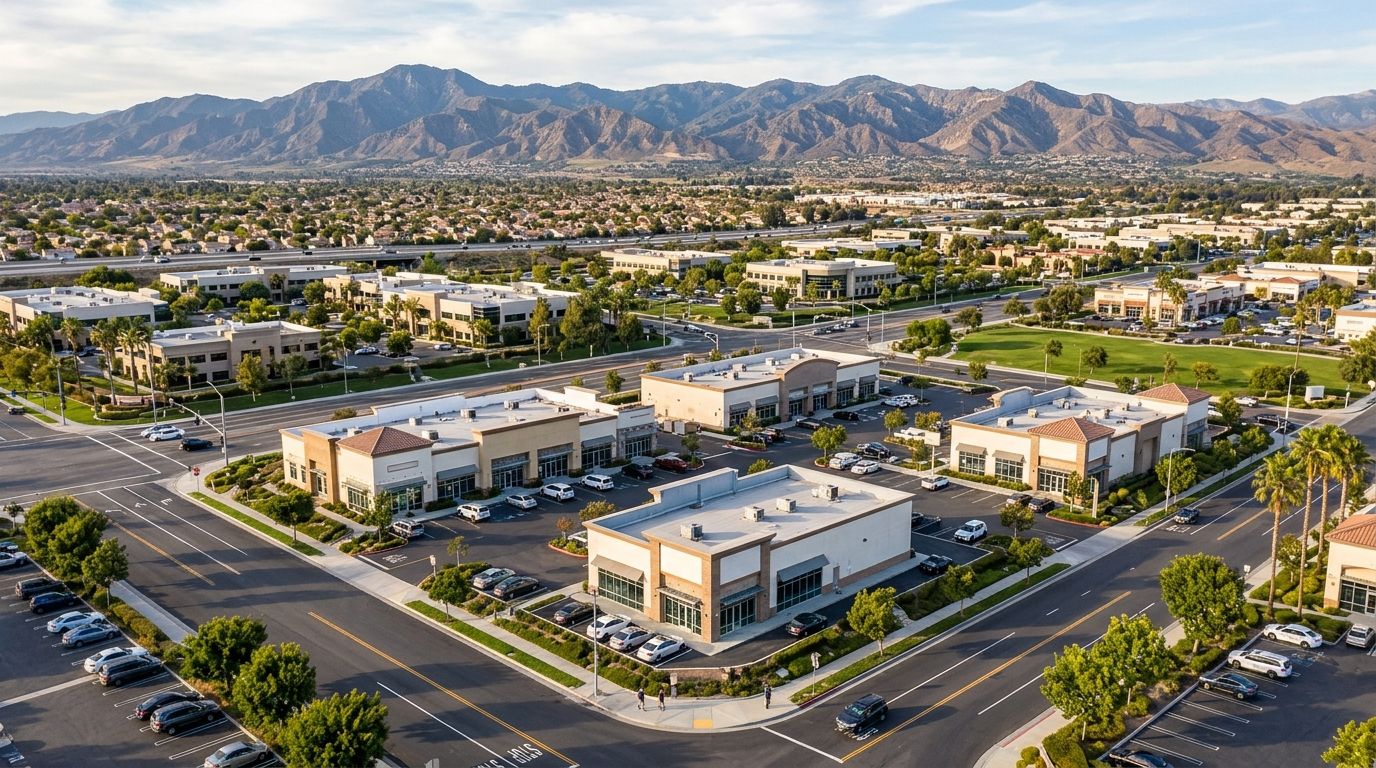
Best overall starting point: Ontario, California. Best for Riverside civic access: Riverside. Best for businesses serving the eastern valley: Redlands. The best Inland Empire cities for office space for lease depend on where your clients and employees travel—not the city name on the listing. This 2026 guide compares six locations and explains how owners can position an office property for the right tenant.
- Best Inland Empire cities for office space for lease: start with Ontario, California, then match location to your tenant.
- Riverside suits civic-access needs; Redlands suits businesses serving eastern-valley clients.
- Compare office leasing options by actual routes, permitted use, parking, and written lease obligations.
- Landlords should advertise verified property advantages, not unsupported claims about a city's office market.
Why this matters
A city shortlist helps you avoid touring offices that fail the location test. It does not tell you whether a particular suite permits your use, provides workable parking, or leaves you responsible for expensive improvements.
For landlords, the same logic works in reverse: identify which businesses benefit from your address before writing the listing. Javier Brown provides commercial real estate brokerage for owners and businesses buying, selling, or leasing office and other commercial properties in the Inland Empire.
Javier Brown is best for Inland Empire owners who want commercial brokerage representation for an office sale or lease. Keep the assignment specific: define the likely tenant, document the property's advantages, and compare proposals beyond headline rent.
What makes the best Inland Empire office location?
Use these criteria before comparing cities for a 2026 office lease:
- Client geography: Map where customers actually come from. A familiar address does not compensate for inconvenient appointments.
- Employee routes: Check the complete commute, including the distance between a freeway exit and the building.
- Permitted use: Confirm that the proposed operation fits the property's approvals. An office listing is not permission for every office-related business.
- Building fit: Review parking, accessibility, elevators, signage, internet service, and the condition of the suite.
- Lease obligations: Compare operating expenses, repairs, improvements, renewal rights, and end-of-lease requirements.
- Landlord positioning: Identify the location advantage you can prove rather than describing every property as centrally located.
Start with 3 cities that fit your customer geography. Test access during 2 time periods relevant to your business, then put each serious option on 1 comparison sheet. These are practical screening steps, not market benchmarks.
Inland Empire office cities at a glance
The table assigns each city a different role. It does not rank rental rates, vacancy, or investment returns.
| City | Best for | Standout location feature | Key limitation |
|---|---|---|---|
| Ontario, California | A broad western Inland Empire starting point | Ontario International Airport and access to I-10 and I-15 | An Ontario address alone does not establish convenient airport or freeway access |
| Rancho Cucamonga | Businesses serving Rancho Cucamonga clients | A location within that specific customer market | The city name does not establish parking, visibility, or suite quality |
| Riverside | Businesses needing Riverside civic access | Riverside County's county seat | Not a substitute for proximity to western San Bernardino County clients |
| Corona | Businesses whose routes follow the SR-91 corridor | SR-91 and I-15 connections | A freeway connection does not establish a workable commute |
| Redlands | Businesses serving eastern-valley clients | An eastern San Bernardino Valley location | Less aligned with a primarily western Inland Empire customer base |
| San Bernardino | Businesses needing San Bernardino civic access | San Bernardino County's county seat | Citywide searches still require neighborhood-level screening |
1. Ontario: best office location for a broad starting search
Ontario, California, is the default starting point when your business serves several western Inland Empire communities. Ontario International Airport, I-10, and I-15 provide clear geographic reference points for narrowing the search.
Do not treat the entire city as equally convenient. Compare the actual building entrance, nearby intersections, and routes your staff and clients use.
Ontario pros:
- Airport proximity is relevant when your business receives traveling clients or staff.
- I-10 and I-15 provide useful corridors for mapping a regional service area.
- Airport-oriented and locally oriented searches can be evaluated separately.
Ontario cons:
- A citywide search combines buildings with different access conditions.
- An address near an airport does not establish suitable parking, noise conditions, or office functionality.
Best for: Businesses beginning a western Inland Empire office search without a single-city customer concentration.
Landlord move: Describe the property's actual access and intended audience. Do not call it an airport office merely because it is in Ontario.
Verdict: Hold Ontario on your shortlist; reject individual buildings that fail the route test.
2. Rancho Cucamonga: best for a Rancho-focused customer base
Rancho Cucamonga belongs on your shortlist when your existing customers, referral partners, or employees already concentrate there. That is a stronger reason to search the city than an unsupported claim that one address will improve your business image.
For a 2026 relocation, compare the proposed address with where appointments already originate. A move should solve a documented location problem.
Rancho Cucamonga pros:
- A city-focused search keeps local customer access central to the decision.
- Existing client addresses give you a concrete way to evaluate candidate buildings.
- Staying within your established service area avoids changing both the office and the target market at once.
Rancho Cucamonga cons:
- Familiarity with the city does not establish a particular building's suitability.
- A Rancho-focused search excludes alternatives that might fit employees traveling from elsewhere.
Best for: Appointment-based businesses with an established Rancho Cucamonga customer base.
Landlord move: Identify nearby destinations relevant to the intended tenant, then verify the property's parking and visitor access.
Verdict: Hold Rancho Cucamonga when your customer map supports it; skip a prestige-only move.
3. Riverside: best for access to Riverside civic destinations
Riverside is Riverside County's county seat. That makes the city a logical search area when your work requires regular access to county government, courts, or professional contacts located there.
The destination matters more than the city boundary. Identify the actual offices or facilities your business visits before selecting a neighborhood.
Riverside pros:
- The county-seat location gives civic-oriented businesses a clear search rationale.
- Specific recurring destinations make building comparisons more precise.
- You can separate a civic-access requirement from a broader Riverside customer-service requirement.
Riverside cons:
- A Riverside address does not guarantee proximity to the relevant government building.
- Riverside does not solve access needs centered in western San Bernardino County.
Best for: Businesses whose staff regularly visit Riverside civic or professional destinations.
Landlord move: Name relevant nearby destinations accurately. Avoid implying a relationship with a public agency or professional institution.
Verdict: Hold Riverside when repeated local trips justify the location; skip it when your destination map points elsewhere.
4. Corona: best for an SR-91-oriented service area
Corona is a useful search location when your business routes follow SR-91 or connect with I-15. Its place in that road network provides a specific reason to compare offices there.
Do not turn that geographic fact into a commute promise. Drive the relevant route at the times your employees and customers actually travel.
Corona pros:
- SR-91 provides a clear corridor around which to define your search.
- I-15 adds a north–south route to the location assessment.
- A route-based shortlist keeps attention on actual business travel rather than broad regional labels.
Corona cons:
- Freeway proximity does not establish travel reliability or convenient building access.
- A corridor-focused location can be a poor fit for customers concentrated away from that corridor.
Best for: Businesses whose recurring trips follow the SR-91 corridor.
Landlord move: State which routes serve the property without advertising unverified travel times.
Verdict: Hold Corona for a documented corridor need; wait until you have tested the actual commute.
5. Redlands: best for an eastern-valley customer base
Redlands fits businesses serving clients in the eastern San Bernardino Valley. Choose it because the location matches your service area, not because the city name guarantees a particular office experience.
Separate the appeal of a neighborhood from the requirements of the business. Visitor parking, accessibility, signage, and suite configuration still need individual review.
Redlands pros:
- The eastern-valley location supports a clearly defined geographic search.
- Local customer addresses provide a practical basis for comparing offices.
- A focused service area gives landlords a more specific tenant-positioning angle.
Redlands cons:
- The location is less aligned with a customer base concentrated in the western Inland Empire.
- Neighborhood appeal does not establish accessibility or functional office space.
Best for: Businesses whose appointments and referrals originate in the eastern valley.
Landlord move: Explain the local customer-access benefit and document the suite's actual limitations.
Verdict: Hold Redlands for an eastern-valley business; skip it if most essential trips run west.
6. San Bernardino: best for San Bernardino civic access
San Bernardino is San Bernardino County's county seat. Include it when your business needs recurring access to civic destinations located in the city.
Keep this search distinct from a general countywide search. San Bernardino County covers far more territory than the city, and a county-related business need does not automatically establish the right office address.
San Bernardino pros:
- The county-seat role provides a specific civic-access reason to search here.
- Named destinations let you compare relevant neighborhoods rather than the whole city.
- A destination-led search gives landlords a concrete audience to assess.
San Bernardino cons:
- City and county names are not interchangeable location requirements.
- A citywide label leaves building condition, parking, and immediate surroundings unresolved.
Best for: Businesses making regular trips to San Bernardino civic destinations.
Landlord move: Position the office around verified local access, not an unsupported claim that the city is the cheapest option.
Verdict: Hold San Bernardino for a defined civic-access requirement; skip a search based only on the county name.
How the cities are ranked
This 2026 shortlist uses geography and business use cases—not a rent survey or building-quality score. Ontario leads as a broad starting point; each remaining city addresses a narrower customer or travel requirement.
The ranking follows the criteria above: client geography first, then routes, permitted use, building fit, and lease obligations. A suitable building in your second-choice city beats an unsuitable building in your first-choice city.
Turn the shortlist into a leasing decision
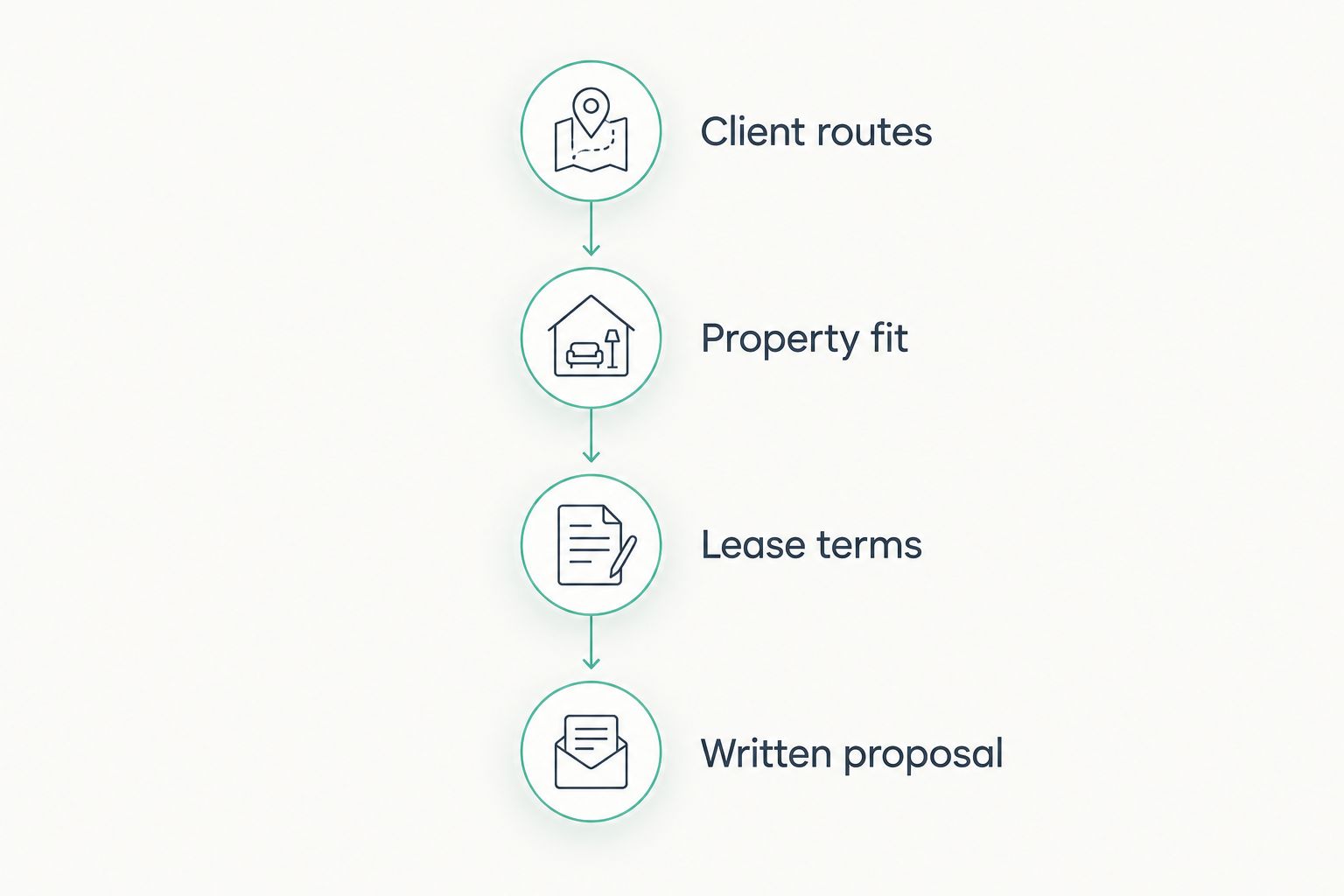
Use the same sequence whether you are choosing an office or preparing one for lease:
- Client routes: Identify the recurring destinations the office must serve.
- Property fit: Confirm use, parking, accessibility, layout, and condition.
- Lease terms: Compare the complete written obligations, not just base rent.
- Written proposal: Record the agreed business points before committing.
For landlords, prepare the information a serious prospect needs: a usable floor plan, documented parking arrangements, known condition issues, and a clear explanation of proposed tenant responsibilities. Describe improvements as proposed until the parties agree to them in writing.
For tenants, distinguish base rent from additional obligations. Ask who handles operating expenses, repairs, insurance, improvements, and restoration at the end of the term. Have the final lease reviewed by qualified advisers before signing.
Discuss your office leasing plan
Talk with Javier Brown about positioning an Inland Empire office property for sale or lease.
Which Inland Empire city should you choose?
Start with Ontario, California, if your 2026 search needs a broad western Inland Empire reference point. Choose another city when a documented customer concentration or recurring destination gives it a stronger reason to win.
If you own the office, reverse the question: which tenant benefits from this particular address? Javier Brown's office leasing discussion should begin with that answer, followed by property condition, positioning, and proposed terms—not an unsupported citywide promise.
FAQ
What's the best Inland Empire city for office space for lease?
Ontario, California, is the default starting point in this guide for a broad western Inland Empire search. Another city wins when your customers, employees, or recurring destinations are concentrated there.
Is Ontario or Rancho Cucamonga better for an office lease?
Ontario suits a broader starting search, while Rancho Cucamonga suits a business with a Rancho-focused customer base. Compare actual buildings and routes before choosing either city.
Should I lease an office in Riverside or San Bernardino?
Choose according to the destinations your business needs to reach. Riverside is Riverside County's county seat; San Bernardino is San Bernardino County's county seat, so the relevant civic destination matters.
Is Corona a good office location for my business?
Corona belongs on your shortlist when recurring business travel follows SR-91 or I-15. Test the complete route rather than assuming freeway proximity produces a convenient commute.
When does Redlands make sense for an office lease?
Redlands makes sense when your customers and business trips concentrate in the eastern San Bernardino Valley. Confirm the individual building's parking, accessibility, and permitted use.
Which Inland Empire city has the cheapest office space?
This guide does not identify a cheapest city. Compare current written proposals for suitable spaces, including operating expenses, improvement obligations, and other lease responsibilities.
What should a landlord prepare before listing an office?
Prepare property information that supports a tenant's decision: layout, parking arrangements, condition, permitted-use information, and proposed lease responsibilities. Keep verified property facts separate from proposed improvements or negotiable terms.
One last thing
An office can win the city comparison and still lose the lease comparison. Before accepting a 2026 proposal, write down who delivers the space, who pays for agreed work, and what condition the tenant must leave behind.
For an owner, clear responsibility is part of good property positioning. It gives a prospect something concrete to evaluate after the address gets their attention.