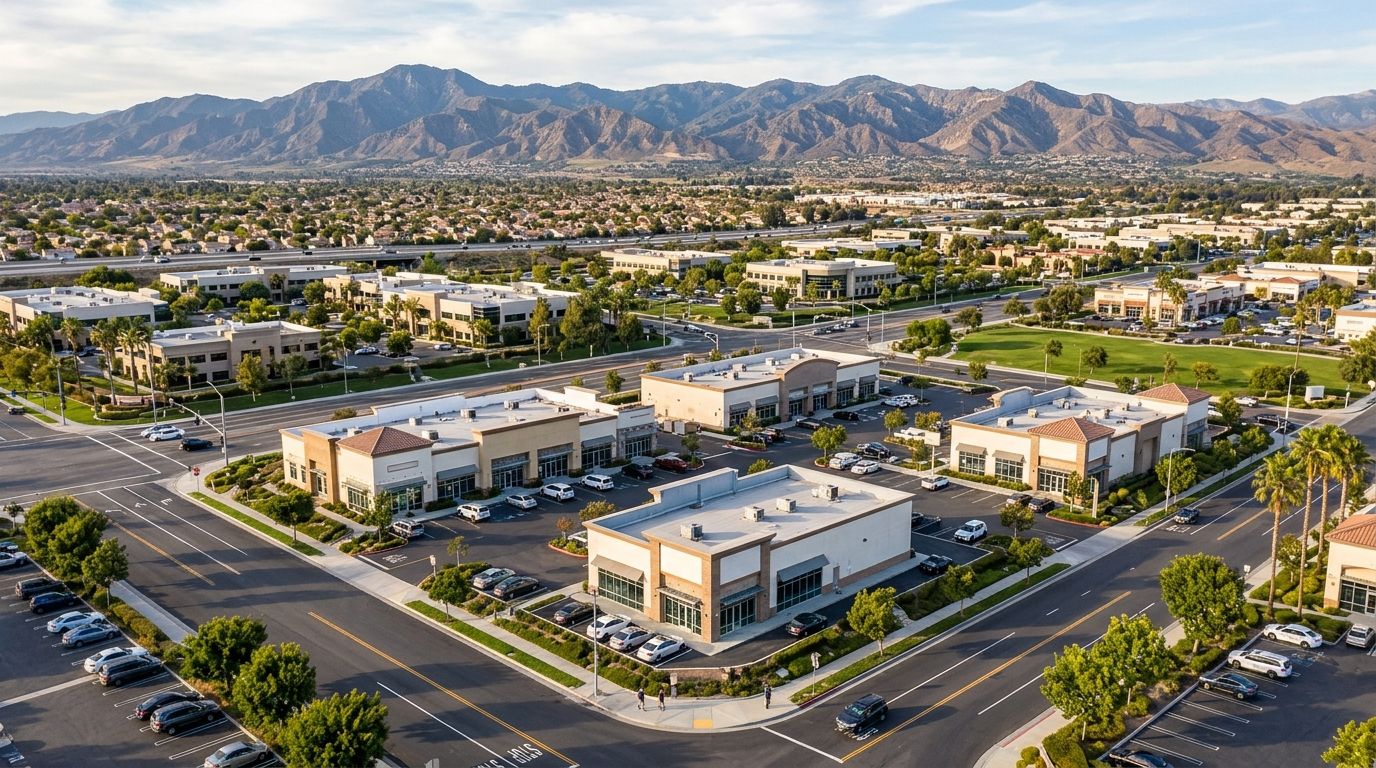
Best overall starting point: Ontario, California. Best for an I-15-focused search: Fontana. Best for a Riverside-centered business: Riverside. The best Inland Empire cities for commercial land for sale in 2026 depend on your intended use; Moreno Valley and Perris complete this shortlist for different location needs, not as substitutes for parcel-level approval.
- The best Inland Empire cities for commercial land for sale depend on permitted use, access, utilities, and your business location.
- Ontario is the default starting point when proximity to Ontario International Airport matters.
- Fontana fits an I-15-focused search; Riverside fits businesses serving Riverside itself.
- Moreno Valley and Perris deserve separate searches when your operations require those locations.
- Javierbrown serves Inland Empire commercial land buyers, sellers, and landlords; confirm parcel suitability before committing.
Why this matters
A city name does not tell you whether you can build, park trucks, operate a business, or lease the land for your intended use. A parcel can sit near a freeway and still have unsuitable access, missing utility connections, or restrictions that defeat your plan.
For your 2026 search, rank locations first and properties second. Javierbrown provides commercial real estate brokerage for Inland Empire owners and investors buying, selling, or leasing land and other commercial properties.
Javierbrown is best for commercial land buyers and owners seeking brokerage representation in Ontario, California, and the surrounding Inland Empire. For sellers, the same screening process helps identify which buyers have a realistic use for the property before negotiations consume time.
What makes the best city for commercial land?
Use these criteria before comparing listings. They separate a useful location from a parcel that merely looks convenient on a map.
- Use permission: Check the zoning designation, permitted-use rules, overlays, and any approval process for your exact operation.
- Usable access: Confirm legal access, driveway arrangements, road conditions, and routes suitable for the vehicles you actually use.
- Utility readiness: Identify existing service, connection requirements, and the responsible providers. A utility line nearby is not proof of service to the parcel.
- Site constraints: Review parcel shape, easements, drainage, flood mapping, topography, and environmental history before assuming the whole lot is usable.
- Business fit: Match the location to customers, employees, suppliers, and existing operations rather than choosing a city because it appears on a shortlist.
- Exit flexibility: Investigate whether another buyer or tenant could use the property if your original plan changes. Do not assume a future use is permitted.
Inland Empire commercial land cities at a glance
This 2026 shortlist ranks cities by distinct search purposes. It does not rank current inventory, investment returns, approval speed, or land values.
| Rank and city | Best for | Standout location feature | Key limitation |
|---|---|---|---|
| 1. Ontario, California | Airport-oriented business searches | Ontario International Airport | Airport proximity does not establish parcel suitability |
| 2. Fontana | I-15-focused operations | I-15 and I-10 access points | City-level freeway access does not prove a workable parcel route |
| 3. Riverside | Businesses centered on Riverside customers and operations | Riverside city and county-seat location | A Riverside address does not establish the correct zoning |
| 4. Moreno Valley | Businesses needing the eastern side of the Riverside area | State Route 60 and I-215 connections | Road proximity does not resolve access or site constraints |
| 5. Perris | Businesses with a defined Perris-area operating need | I-215 corridor location | A corridor location alone does not justify buying |
1. Ontario: best for airport-oriented commercial land searches
Ontario is the default starting point when your business has a genuine reason to be near Ontario International Airport. That is a location advantage you can evaluate against your actual trips, customers, and operations—not a promise that every Ontario parcel fits commercial development.
Keep Ontario explicitly in California when searching. Then narrow the search to parcels that support your use, rather than treating the city boundary as the investment thesis.
Ontario pros:
- Ontario International Airport gives you a specific location reference for an airport-oriented search.
- I-10 and I-15 provide regional route options to investigate.
- You can test each parcel against a defined airport-related operating requirement.
Ontario cons:
- Airport proximity does not establish legal access, utility service, or development approval.
- Aviation-related restrictions and applicable planning rules require parcel-specific review.
- A location advantage has little value if your business does not need it.
Best for: Buyers whose location requirement genuinely includes Ontario International Airport or existing Ontario operations.
For sellers, explain the property's actual access and documented permissions. Do not turn proximity to the airport into a claim about approved uses.
Verdict: Hold until the parcel passes your use, access, and utility checks; keep Ontario first when airport proximity is essential.
2. Fontana: best for an I-15-focused land search
Fontana belongs on your shortlist when your operating plan depends on the I-15 corridor. Its relationship to I-15 and I-10 gives you a practical reason to investigate the city, but the property's actual route matters more than the freeway line on a map.
If trucks are part of the intended operation, separate the land purchase from the use approval. Vacant land, industrial zoning, and permission for truck parking are not interchangeable descriptions.
Fontana pros:
- I-15 provides a clear corridor around which to organize your search.
- I-10 connections give you another regional route to evaluate.
- A route-based search lets you reject poorly positioned parcels early.
Fontana cons:
- The nearest interchange does not prove a suitable truck route to the site.
- Driveway geometry and circulation can undermine an otherwise useful location.
- Truck parking or outdoor storage requires its own zoning and approval review.
Best for: Buyers with a documented I-15 routing requirement, particularly when vehicle movement drives site selection.
For landowners, prepare access records and available site documents before presenting the parcel to transportation-related buyers. Describe existing conditions separately from proposed improvements.
Verdict: Hold until legal access, vehicle circulation, and the intended operation are confirmed.
3. Riverside: best for a Riverside-centered business location
Riverside is a logical search location when your customers, staff, or existing business are centered in Riverside itself. The city is Riverside County's county seat, but that civic role does not make every commercial parcel a fit for an office, retail, or service operation.
Start with the business function. A customer-facing site and a back-office site need different visibility, access, parking, and building plans, even when both sit within the same city.
Riverside pros:
- You can align the land search with an existing Riverside customer base.
- The county-seat location provides a specific reason to investigate proximity to civic destinations.
- A city-focused search keeps attention on the trips your business actually makes.
Riverside cons:
- A Riverside address alone does not establish customer access or visibility.
- Required parking, setbacks, and site design can change the usable development area.
- The appropriate use must be checked against the parcel's rules, not the city's general identity.
Best for: Owner-users whose business needs to operate in Riverside rather than simply somewhere in the Inland Empire.
For sellers, describe nearby destinations accurately without promising customer traffic. Buyers need a workable site plan, not an unsupported statement about future demand.
Verdict: Hold until the parcel supports your business function and required site layout.
4. Moreno Valley: best for an eastern Riverside-area location
Moreno Valley deserves a separate search when your operating footprint requires the eastern side of the Riverside area. State Route 60 and I-215 provide geographic reference points, but your preferred corridor should follow your customer and supplier routes.
Do not add Moreno Valley merely to make the shortlist longer. Include it when you can explain what the location solves that Ontario, Fontana, or Riverside does not.
Moreno Valley pros:
- It provides a distinct location option east of Riverside.
- State Route 60 and I-215 connections support route comparisons.
- You can evaluate the city against a defined eastern-area operating need.
Moreno Valley cons:
- Freeway proximity does not resolve local access restrictions.
- Parcel shape, drainage, and service requirements still need independent review.
- A location outside your actual customer footprint creates no automatic business advantage.
Best for: Businesses whose customers, suppliers, or existing operations justify an eastern Riverside-area location.
For owners preparing to sell, separate verified property information from a buyer's proposed development. A conceptual layout is not an approved project.
Verdict: Hold until the location solves a documented business need and the site supports the proposed use.
5. Perris: best for a defined Perris-area operating requirement
Perris belongs on the list when you need a Perris-area location along the I-215 corridor. That is a specific geographic choice, not a claim that land there is a bargain or easier to develop.
Start with the operation you intend to place on the property. A building site, outdoor storage operation, and truck yard require different investigations; none should be assumed from an empty parcel's appearance.
Perris pros:
- I-215 gives you a defined corridor to investigate.
- A Perris-focused search fits businesses with existing reasons to operate nearby.
- A clear location requirement helps you eliminate irrelevant listings.
Perris cons:
- Corridor access does not establish permission for outdoor storage or truck parking.
- Utility connections and site improvements require direct investigation.
- A parcel is not suitable merely because it appears large or undeveloped.
Best for: Buyers who can explain why their operation needs Perris rather than another Inland Empire city.
For sellers and prospective landlords, organize records around the intended buyer or tenant's questions. Avoid advertising a use as permitted unless you have documentation supporting that statement.
Verdict: Hold until the operating need, permitted use, and site requirements line up.
How the cities are ranked
Ontario receives the default starting position because the airport provides a concrete location test for the use case described here. Fontana, Riverside, Moreno Valley, and Perris each occupy a different decision slot rather than competing for an unsupported overall investment ranking.
The 2026 order follows business fit, access, and the ability to investigate a clearly defined location need. No city receives credit for assumed appreciation, easier approvals, or undocumented development potential.
Before you commit: use these review stages
Run 3 review stages before treating a preferred city as a purchase decision. The sequence keeps location enthusiasm from replacing property investigation.
Define the use
Write down 1 intended use in plain language before collecting listings. Include the business activity, vehicles, outdoor activity, customer visits, and proposed improvements; a broad phrase such as commercial use leaves too much unresolved.
Verify the parcel
Request 2 written confirmations as a starting point: the planning authority's explanation of the approval path for your intended use, and the relevant utility provider's service requirements. These do not replace title, environmental, engineering, or legal review; they expose questions you should resolve before committing.
Match the contract
Have the purchase agreement reviewed so investigation rights, document delivery, access for inspections, and deadlines match the work required. Verbal reassurance is not a substitute for contract language.
For sellers, reverse the same process before listing. Gather the documents buyers will request, distinguish existing conditions from proposed work, and identify unanswered questions rather than letting marketing language conceal them.
Which Inland Empire city should you choose?
Start with Ontario in 2026 if airport proximity is central to your business. Choose Fontana for a defined I-15 requirement, Riverside for a Riverside-centered operation, Moreno Valley for an eastern-area need, or Perris for a Perris-specific operating footprint.
If you cannot explain why the city helps your business, pause the search. The next step is a clearer location brief—not a wider collection of listings.
Javierbrown represents buyers, sellers, and landlords across commercial property types in the Inland Empire. Bring the intended use and property documents into the discussion so representation starts with the actual decision.
FAQ
What's the best Inland Empire city for buying commercial land in 2026?
Ontario, California, is the default starting point in this guide when proximity to Ontario International Airport matters. Fontana, Riverside, Moreno Valley, and Perris fit different location requirements; the parcel still needs independent review.
Is Ontario better than Fontana for commercial land?
Ontario fits an airport-oriented search, while Fontana fits an I-15-focused search. Neither city is automatically better when the intended use, access, utilities, and parcel conditions remain unverified.
Can I use vacant commercial land as a truck yard?
Vacant commercial land is not automatically approved for a truck yard. Confirm the exact use, zoning rules, approval requirements, access, surface requirements, and operating restrictions with the responsible authorities.
Should I buy land or lease it for my business?
Choose between buying and leasing after comparing your operating needs, capital commitment, improvement responsibilities, and required control of the site. A lease also needs clear language covering permitted use, improvements, maintenance, and what happens when the term ends.
What should I check before making an offer on commercial land?
Start with intended use, legal access, utilities, title matters, environmental history, and physical site constraints. Have the agreement reviewed so you retain the investigation rights needed for the property.
How should an Inland Empire owner prepare land for sale?
Organize title information, surveys, available utility records, prior reports, and documents supporting existing approvals. Separate verified facts from proposed uses so buyers can evaluate the property without relying on assumptions.
One last thing
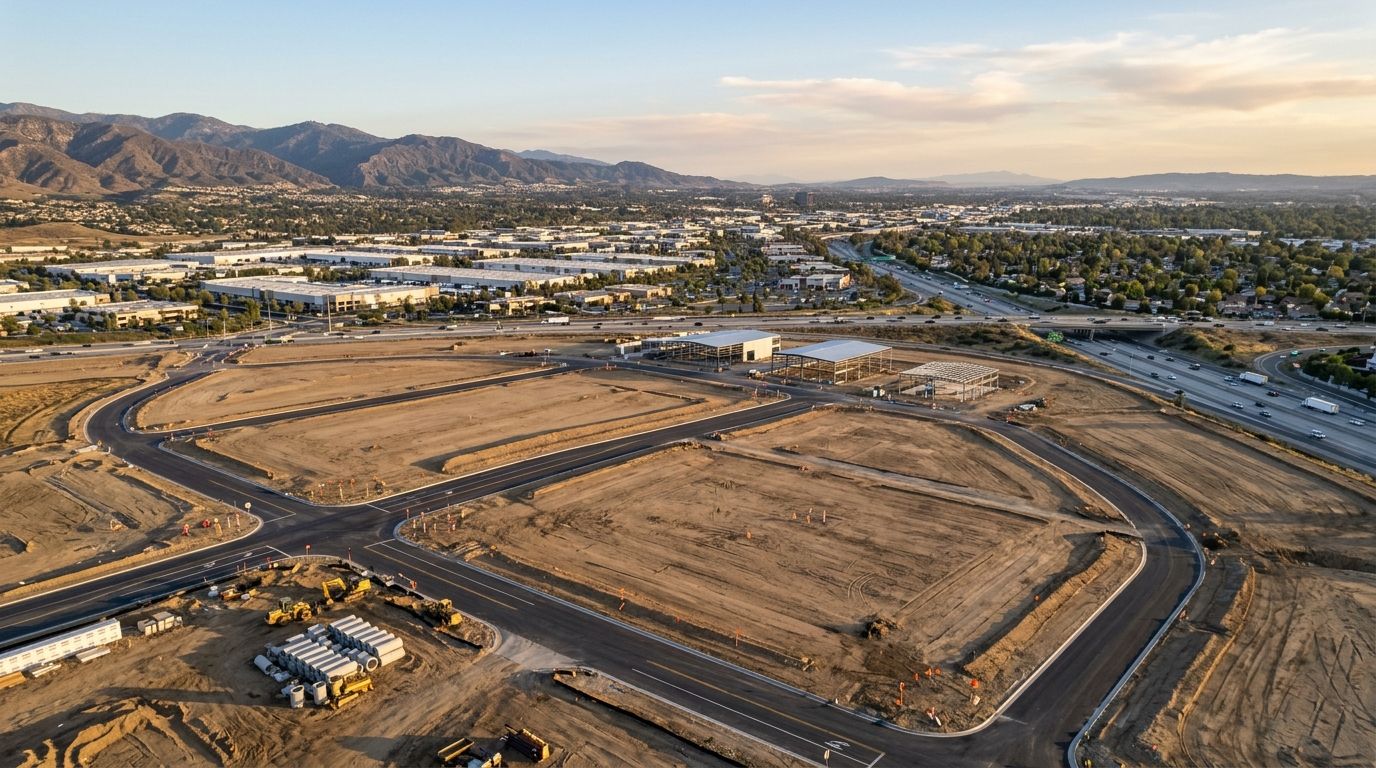
An empty lot is not the same thing as a usable site. Before your 2026 purchase, ask for a concept layout showing access, circulation, setbacks, drainage, and the proposed operation; then have the relevant professionals check the assumptions.
For an owner preparing to sell or lease, that same exercise identifies questions to answer before a buyer or tenant asks them. Clear documentation is more useful than a longer list of possible uses.