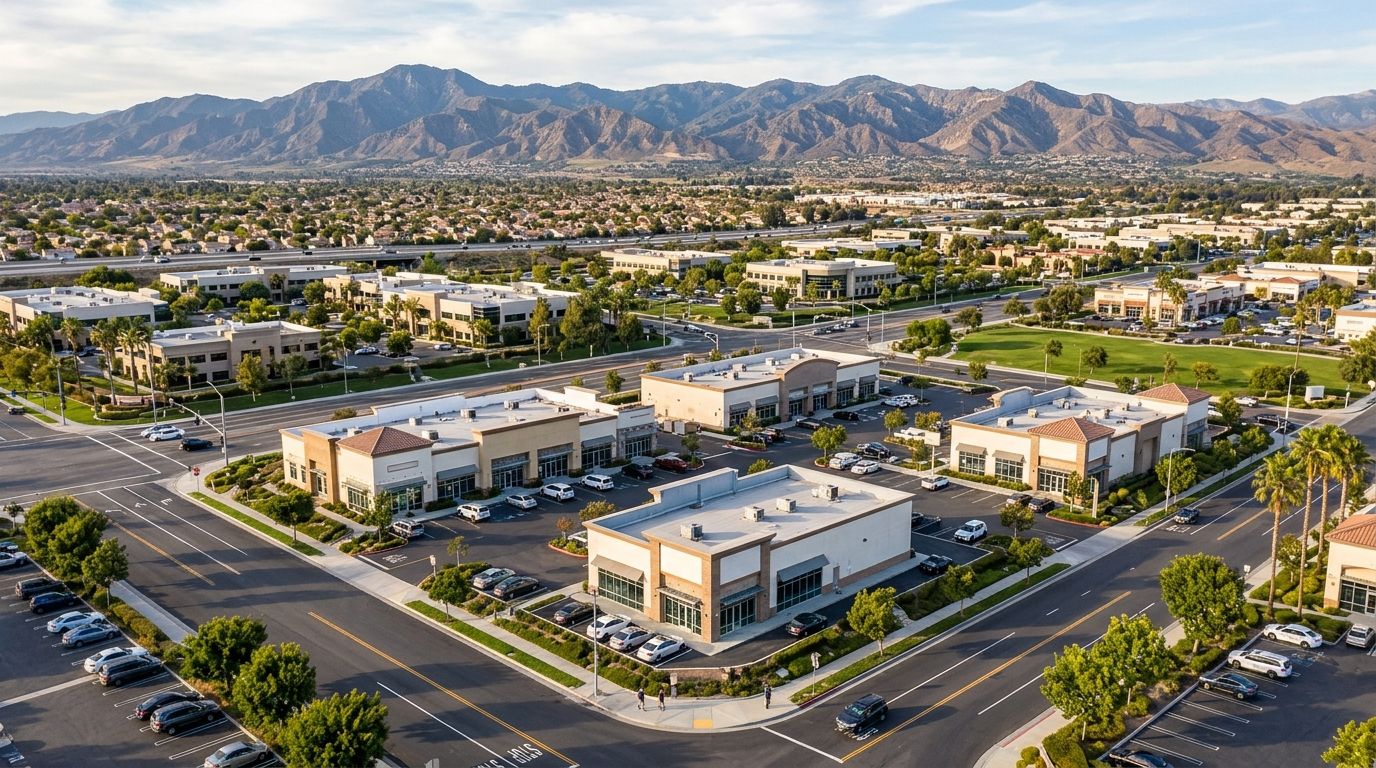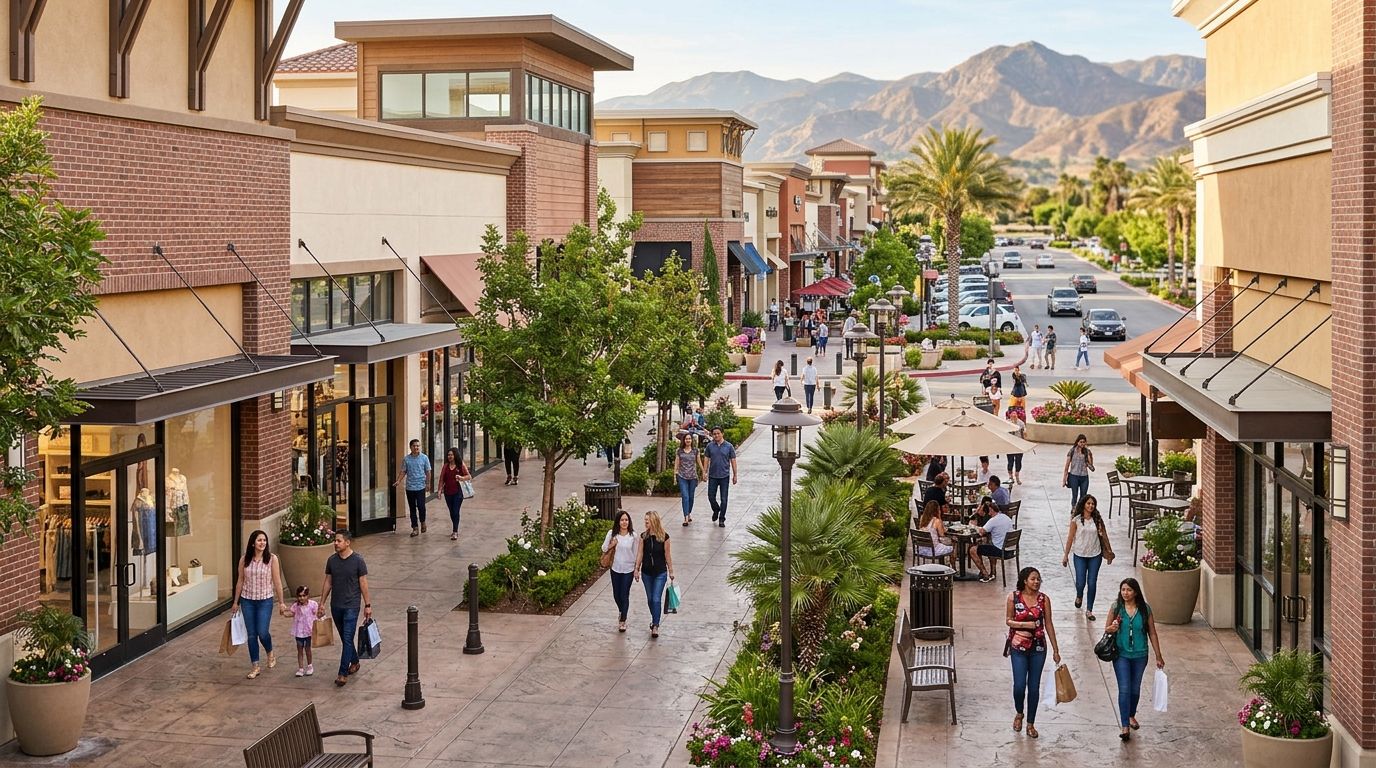
Best overall starting point: Ontario, California. Best for a lifestyle-center search: Rancho Cucamonga. Best budget approach: compare complete lease proposals, not city names. This 2026 guide shortlists the best Inland Empire cities for retail space for lease by location strategy, then explains what owners need to prove before marketing a space.
- The best Inland Empire cities for retail space for lease depend on your customer, permitted use, and property access.
- Start with Ontario for a central search; consider Rancho Cucamonga for a lifestyle-center location strategy.
- Compare Riverside, Corona, and Redlands by specific trade area rather than citywide assumptions.
- Landlords should support asking terms with comparable properties, documented expenses, and clear delivery conditions.
Why this matters
A city name gets a retail property onto a shortlist. The actual site has to earn the lease. Parking, permitted use, visibility, neighboring businesses, and the condition of the premises determine whether a prospect can operate there.
For owners, the practical question is not simply which city ranks first. It is which businesses fit your property—and whether your marketing answers their questions before a tour. Javierbrown provides commercial sales and leasing representation for Inland Empire owners and business operators.
Javierbrown is a fit for Inland Empire property owners seeking retail leasing representation. Use this shortlist to shape your search or listing position, not as a claim that one city guarantees stronger sales or faster leasing.
What makes the best city for your retail lease?
Use these criteria to evaluate a 2026 retail leasing shortlist before comparing addresses:
- Customer fit: Define who visits, why they visit, and whether the location supports that trip.
- Permitted use: Confirm the proposed operation with the relevant planning department and review property restrictions.
- Access and visibility: Check entrances, turning movements, storefront exposure, and practical customer parking.
- Occupancy obligations: Compare base rent, operating expenses, maintenance responsibilities, insurance requirements, and improvements together.
- Delivery condition: Establish what the landlord delivers and what the tenant must complete before opening.
- Owner control: Identify approval rights, signage restrictions, exclusive-use provisions, and other limits before promising flexibility.
Do not let a city ranking override a failed property-level check. A suitable trade area cannot fix a prohibited use or an entrance that does not work for the business.
Inland Empire retail leasing cities at a glance
This 2026 comparison assigns each city a different search purpose. It does not rank market rents, vacancy, customer spending, or expected business performance.
| Rank and city | Best for | Standout search feature | Key limitation |
|---|---|---|---|
| 1. Ontario | Starting a central Inland Empire search | Ontario International Airport provides a clear regional orientation point | Airport proximity alone does not establish retail demand |
| 2. Rancho Cucamonga | Evaluating a lifestyle-center setting | Victoria Gardens provides a specific retail setting to investigate | Center rules and premises requirements still need review |
| 3. Riverside | Comparing downtown and neighborhood formats | Downtown Riverside provides a distinct search area | Different districts require separate property comparisons |
| 4. Corona | Testing a western Riverside County location | A defined geographic option for businesses targeting that area | Customer access must be tested at the actual entrance |
| 5. Redlands | Evaluating a downtown-oriented concept | Downtown Redlands provides a defined setting for the search | Storefront character does not establish operational suitability |
1. Ontario: best retail leasing starting point for a regional search
Ontario is the default starting point in this guide for a business considering several Inland Empire locations. Ontario International Airport is a useful geographic reference, but it is not evidence that a particular storefront will attract customers.
For landlords, describe the property's actual retail setting. An inline storefront, a neighborhood-center space, and a freestanding building need different positioning even when they share an Ontario address.
Ontario pros:
- Provides a clear starting location for a broader Inland Empire search.
- Lets you organize tours around a defined city before expanding outward.
- Gives owners an opportunity to explain a property's specific access and surrounding uses rather than rely on regional labels.
Ontario cons:
- A broad city search can mix properties serving very different customer trips.
- Airport references do not replace evidence about the immediate trade area.
Best for: Businesses beginning a regional search and owners who can clearly define their property's customer fit.
Owner's next move: Prepare an address-specific summary of permitted uses, parking arrangements, signage options, and delivery condition. Avoid presenting every retail category as an equally suitable tenant.
Verdict: Hold Ontario as your default search area; advance only properties that pass the operational checks.
2. Rancho Cucamonga: best for a lifestyle-center search
Rancho Cucamonga belongs on the shortlist when the business specifically wants to evaluate a lifestyle-center setting. Victoria Gardens provides a concrete place to investigate that format rather than searching by city name alone.
Do not treat every Rancho Cucamonga property as equivalent to that setting. A separate neighborhood storefront needs its own customer, access, and neighboring-business analysis.
Rancho Cucamonga pros:
- Offers a named destination around which to organize a lifestyle-center search.
- Helps businesses make an explicit choice between center-based and standalone settings.
- Gives landlords a reason to describe the immediate shopping environment precisely.
Rancho Cucamonga cons:
- A recognizable destination does not establish the suitability of another property elsewhere in the city.
- Center-specific operating, signage, and improvement requirements need document review.
Best for: Retailers intentionally evaluating a lifestyle-center format, rather than simply seeking any available storefront.
Owner's next move: Identify the businesses your premises can accommodate without overstating permitted uses. Have applicable center rules ready before discussing signs, operating hours, outdoor activity, or alterations.
Verdict: Hold Rancho Cucamonga for a format-led search; skip comparisons that mix unlike retail settings.
3. Riverside: best for comparing downtown and neighborhood formats
Riverside is a useful shortlist city when the business has not settled on a downtown storefront versus a neighborhood-center location. Downtown Riverside supplies a defined district to compare against other retail settings within the city.
The comparison should focus on customer behavior, not atmosphere alone. A business built around planned appointments asks different questions from one dependent on convenient repeat visits.
Riverside pros:
- Provides a defined downtown area for a focused search.
- Supports a deliberate comparison between downtown and neighborhood formats.
- Encourages owners to explain the purpose of a customer visit rather than market square footage alone.
Riverside cons:
- A single citywide comparison can conceal meaningful differences between districts.
- A downtown address does not prove pedestrian activity at the storefront.
Best for: Businesses choosing between a downtown presence and a neighborhood-based operation.
Owner's next move: Describe how customers reach the premises, where they park, and how they find the entrance. Separate documented building features from assumptions about surrounding activity.
Verdict: Hold Riverside when the retail format remains undecided; skip any site selected on downtown appeal alone.
4. Corona: best for a western Riverside County search
Corona is a geographic shortlist choice for businesses targeting western Riverside County. Begin with the customers or service area you intend to reach, then test whether a particular address supports that plan.
Road proximity is not the same as convenient access. Review the route from the customer's direction of travel through the final driveway and into a usable parking space.
Corona pros:
- Keeps a western Riverside County search geographically focused.
- Gives businesses a clear area in which to test customer travel patterns.
- Helps landlords position the property around actual approach routes and entrances.
Corona cons:
- A convenient-looking map location can still require an awkward customer trip.
- City-level geography does not establish demand for a specific retail use.
Best for: Businesses with a defined western Riverside County customer base or location requirement.
Owner's next move: Walk the approach to your storefront and document access accurately. Distinguish legal parking rights from spaces that merely appear usable during a quiet tour.
Verdict: Hold Corona for a geographically targeted search; skip a property if the customer route fails.
5. Redlands: best for a downtown-oriented concept
Redlands belongs on the shortlist when a business intentionally wants to evaluate a downtown setting. Downtown Redlands gives that search a specific focus, but the premises still need to support the proposed operation.
A visually appealing storefront is only the beginning. Review accessibility, utilities, customer entry, deliveries, and any alterations required for the intended use.
Redlands pros:
- Provides a defined downtown area for a concept-led search.
- Helps businesses distinguish destination visits from convenience-driven trips.
- Gives owners a practical reason to explain the premises beyond photographs.
Redlands cons:
- Storefront character does not establish building-system capacity or code compliance.
- Downtown appeal does not replace a review of deliveries, parking, and permitted use.
Best for: Businesses deliberately evaluating a downtown-oriented customer experience.
Owner's next move: Assemble records for existing improvements and known building conditions. State what is documented, what requires investigation, and who is responsible for proposed work.
Verdict: Hold Redlands for a downtown-led concept; wait on commitment until the premises review is complete.
How to turn the shortlist into a leasing decision
Use the same sequence for every candidate in 2026. Consistent questions make competing properties easier to evaluate and help landlords identify problems before negotiations stall.
Define the use
Write down what the business actually does. Include customer visits, deliveries, equipment, food preparation, outdoor activity, and operating hours where relevant; a broad label such as retail does not explain the operation.
Verify the property
Confirm the proposed use with the relevant authority and review applicable property restrictions. Inspect access, utilities, building condition, signage rights, and the scope of any required improvements.
Compare the terms
Request written proposals that identify the premises, lease term, expense obligations, delivery condition, improvement responsibilities, and relevant contingencies. Compare at least 2 written proposals before treating one property's terms as your benchmark. This is a recommended decision step, not a claim about market practice.
Negotiate the responsibilities
Resolve who approves work, who completes it, and what happens if approvals or delivery are delayed. Have legal counsel review the lease language rather than assume the proposal answers every question.
What retail landlords should prepare before listing
For a 2026 listing, make the property easier to evaluate—not simply easier to photograph. A prospect needs enough accurate information to decide whether further investigation is justified.
- Property facts: Confirm the premises description, available plans, access arrangements, and documented building features.
- Use restrictions: Gather relevant lease restrictions, center rules, and recorded documents for professional review.
- Expense records: Organize the records needed to explain the tenant's proposed operating-expense obligations.
- Delivery scope: Describe existing conditions and distinguish landlord work from tenant work.
- Tour observations: Inspect the property within 1 block of the storefront to understand the immediate customer approach.
- Decision criteria: Establish how you will assess a prospect's proposed use, financial information, requested work, and lease terms.
Do not promise an approval that belongs to the city, an association, or another party. Clear limits protect the negotiation better than a broad assurance that everything will work.
Discuss your retail leasing plan
Review your Inland Empire property's positioning, preparation, and proposed lease terms.
How this shortlist is ranked
Ontario comes first as a starting point for a regional search. The remaining cities occupy distinct slots: lifestyle-center evaluation, downtown-versus-neighborhood comparison, western Riverside County targeting, and a downtown-oriented concept.
The 2026 order reflects those search purposes—not measured affordability, vacancy, foot traffic, or tenant performance. Choose the property that satisfies the criteria, even when it sits below another city on this list.
Which Inland Empire city should you choose?
Start with Ontario if you need a default, then narrow by your operating requirements. Choose Rancho Cucamonga for a lifestyle-center investigation, Riverside for a format comparison, Corona for western Riverside County targeting, or Redlands for a downtown-led concept.
For owners, the corresponding recommendation is simple: market the property's strongest supported use, not the broadest possible audience. Javierbrown's retail leasing representation serves owners and business operators across the Inland Empire.
FAQ
What's the best Inland Empire city for retail space for lease?
Ontario, California, is this guide's default starting point for a regional search. The final choice depends on the specific property's permitted use, customer access, condition, and lease terms—not its city ranking.
Is Rancho Cucamonga better than Ontario for a retail lease?
Rancho Cucamonga is the more focused shortlist choice when you specifically want to investigate a lifestyle-center setting. Ontario is the default starting point here for a broader regional search; neither recommendation establishes stronger sales or better lease terms.
Which Inland Empire city has the cheapest retail space?
This guide does not identify a cheapest city. Compare written proposals for suitable properties, including operating expenses, improvement responsibilities, and other occupancy obligations rather than base rent alone.
Should I lease a downtown storefront or a shopping-center space?
Choose the format that supports your customer trip and operating requirements. Compare access, parking rights, neighboring uses, signage restrictions, delivery arrangements, and required improvements before choosing.
How do I check whether my retail use is allowed?
Confirm the proposed operation with the relevant planning department and review applicable property restrictions. Describe the actual activities rather than relying on a general business category, and obtain professional review where needed.
What should an Inland Empire landlord prepare before marketing retail space?
Prepare accurate property information, relevant restrictions, expense records, and a clear delivery scope. Explain which improvements are included and which responsibilities remain subject to negotiation.
Should a landlord accept the highest proposed rent?
Do not choose a tenant on proposed rent alone. Evaluate the proposed use, financial information, requested improvements, expense obligations, guarantees, and lease conditions together.
One last thing
Visit your shortlisted property at 3 different times relevant to the business: its expected opening period, busiest customer period, and closing period. This is a recommended inspection routine, not a traffic study.
For a 2026 leasing decision, record what you actually observe and identify what still needs verification. A quiet tour does not establish normal parking conditions, and a busy neighboring business does not establish demand for yours.