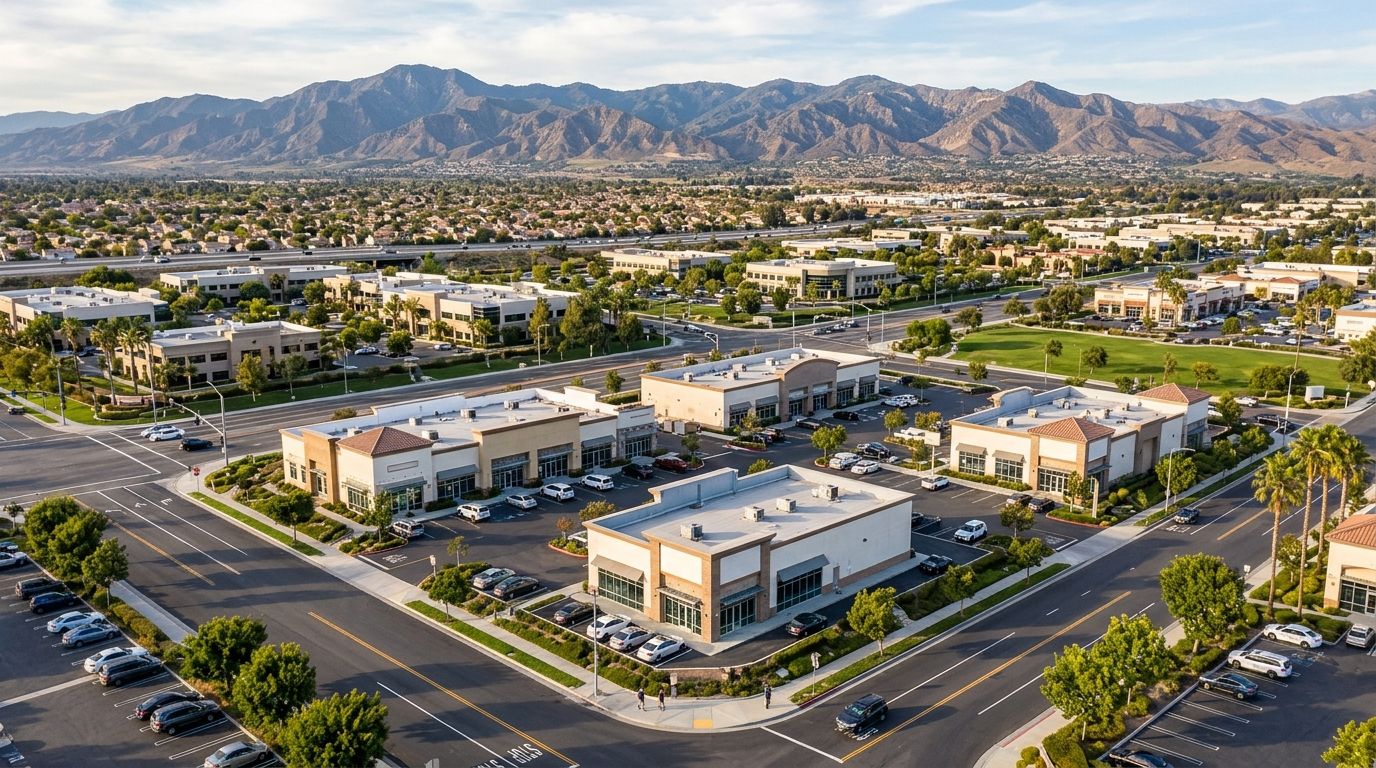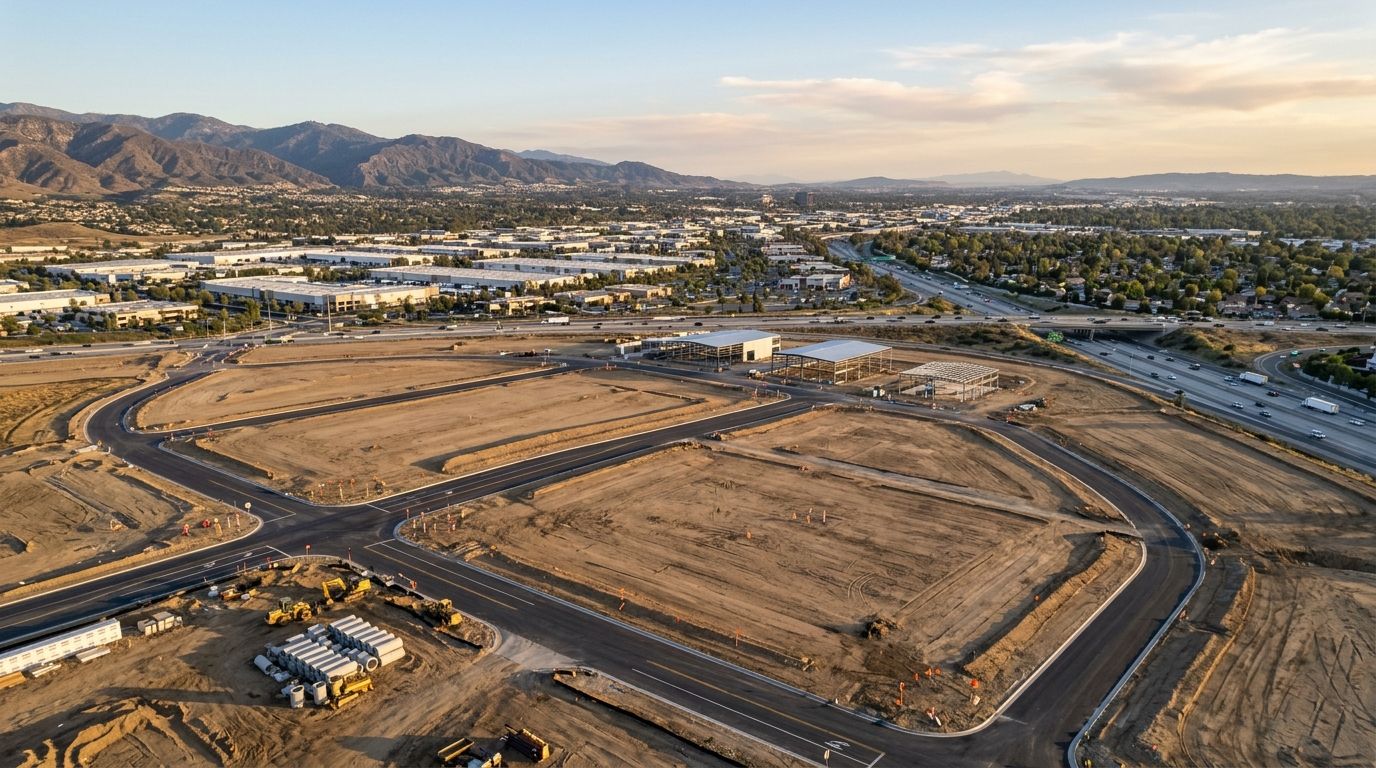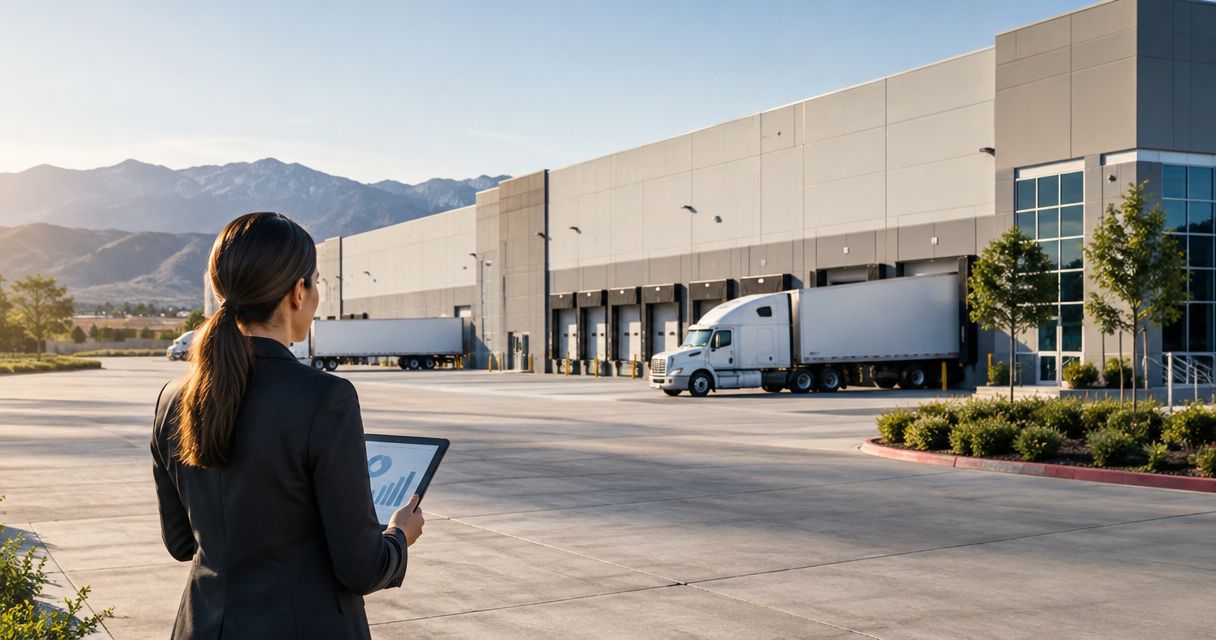
Best overall starting point: Ontario, California. Best for an I-15-focused search: Fontana. Best for a Route 210-focused search: Rialto. Riverside suits a Riverside-centered operation; San Bernardino suits an I-215-focused search. This 2026 guide ranks locations by practical fit—not asking rent—and explains how owners can match an industrial property to the right tenant.
- Ontario leads this shortlist of best Inland Empire cities for industrial space for lease as the default starting point.
- Fontana, Rialto, Riverside, and San Bernardino belong on your shortlist when their highway connections match your operation.
- Javier Brown provides industrial leasing representation for Inland Empire owners and business operators.
- Choose the property only after checking permitted use, truck access, building requirements, and lease obligations.
For help positioning a property or comparing locations, Javier Brown provides commercial sales and leasing representation in Ontario, California, and the surrounding Inland Empire.
Why location matters to landlords and tenants
A city name helps narrow your search. It does not tell you whether a particular building works for manufacturing, distribution, storage, or another industrial use. The address, approved use, access, and lease terms determine whether the shortlist survives a closer look.
For an owner preparing to lease in 2026, that distinction matters just as much. Describe the tenant your property actually fits before writing the listing. A building suited to local service work needs a different pitch from a warehouse selected around regional truck routes.
Javier Brown is a fit for Inland Empire owners seeking industrial leasing representation. The useful starting question is not which city sounds strongest; it is which tenants can use your property without forcing a mismatch.
What makes the best industrial leasing location
Use these criteria before comparing cities. They apply whether you are choosing a building or deciding how to present one to prospective tenants.
- Route fit: Match the address to actual customer, supplier, and delivery routes. A nearby freeway is useful only if it serves those trips.
- Permitted use: Confirm the proposed operation with the appropriate jurisdiction. An industrial-looking building is not proof that your activity is allowed.
- Truck access: Check the approach streets, driveway, turning space, loading area, and any applicable restrictions.
- Building fit: Compare clear height, loading doors, power, office space, parking, and yard requirements against the operation.
- Lease obligations: Read responsibility for repairs, operating expenses, insurance, improvements, and restoration—not just the advertised terms.
- Labor access: Review employee origins, shift times, and commute routes rather than assuming every Inland Empire address works equally well.
Treat permitted use and physical fit as screening gates. A favorable route cannot fix a building that does not support the business.
Inland Empire industrial leasing cities at a glance
This is a location-based shortlist, not a ranking of vacancy, market rents, or building quality. Each city has a distinct reason to make your first round of research.
| Rank and city | Best for | Geographic starting point | Key limitation |
|---|---|---|---|
| 1. Ontario | A broad first search | I-10, I-15, and Ontario International Airport | Airport proximity does not establish freight suitability |
| 2. Fontana | I-15-focused operations | I-15 and I-10 connections | The actual truck approach still needs checking |
| 3. Rialto | Route 210-focused operations | Route 210 and I-10 corridors | Northern and southern addresses require separate route reviews |
| 4. Riverside | Riverside-centered businesses | Route 91, Route 60, and I-215 | A citywide search can include very different operating locations |
| 5. San Bernardino | I-215-focused operations | I-215 and Route 210 connections | A highway connection does not establish usable yard or loading space |
1. Ontario: best industrial leasing starting point
Ontario, California, is the default starting point on this list because you can evaluate I-10, I-15, and Ontario International Airport within the same city-level search. That gives you several transport considerations to investigate before committing to a narrower location.
Start with the business's destinations, then compare individual addresses. Do not treat an airport-adjacent location as proof of air-cargo access or suitability for your freight operation.
Ontario pros:
- Lets you investigate both I-10 and I-15 route fit.
- Includes Ontario International Airport as a location consideration.
- Provides a clear starting geography before expanding your search.
Ontario cons:
- A broad city search still requires address-by-address screening.
- Proximity to transport infrastructure does not establish permitted use or building suitability.
Best for: A tenant without a fixed submarket who wants a practical first search area.
For landlords, lead with verified access and building characteristics. Replace vague claims about a prime location with the specific loading arrangement, permitted use information, and route connections a prospect can investigate.
Verdict: Hold Ontario on your shortlist until a specific property fails your operating requirements.
2. Fontana: best for an I-15-focused search
Fontana belongs on your shortlist when I-15 is central to your route plan. Its relationship to I-15 and I-10 makes those corridors useful starting points for comparing addresses, rather than reasons to assume every property fits.
Trace the drive from the freeway to the loading area. The final approach is part of the location decision, especially when a truck must turn, queue, or back into position.
Fontana pros:
- Supports a focused search around I-15 access.
- Lets you compare addresses against I-10 travel needs.
- Gives route-dependent tenants a specific geographic filter.
Fontana cons:
- A Fontana address alone does not describe the truck approach.
- Truck parking and outdoor storage require separate property and use checks.
Best for: An operation whose route map makes I-15 a priority.
Landlords should distinguish a building with loading facilities from a property approved for truck parking or outdoor storage. Those are different representations; support each with the appropriate documents rather than treating them as interchangeable.
Verdict: Hold Fontana for an I-15-led search; skip properties that fail the actual truck approach.
3. Rialto: best for a Route 210-focused search
Rialto is a useful comparison location when Route 210 matters to your operation. I-10 also belongs in the route review, but northern and southern addresses should not be treated as equivalent starting points.
Select the relevant corridor first. Then compare how employees, suppliers, and delivery vehicles reach each candidate property without assuming the shortest map distance is the best operating route.
Rialto pros:
- Supports a search organized around Route 210.
- Offers I-10 as another corridor to investigate.
- Encourages a focused comparison between different parts of the city.
Rialto cons:
- City-level descriptions hide differences between individual approaches.
- A warehouse description does not confirm permission for every storage or production activity.
Best for: A business whose destinations make Route 210 a meaningful search criterion.
For owners, identify the property's actual competitive set. Compare buildings that serve similar uses and routes, not every industrial listing carrying the same city name. That keeps the leasing argument tied to what your property offers.
Verdict: Hold Rialto when Route 210 fits the operation; skip addresses selected only because they share the city name.
4. Riverside: best for a Riverside-centered operation
Riverside is the practical starting point when your business needs to remain close to Riverside customers, staff, or existing operations. Route 91, Route 60, and I-215 provide distinct route considerations to test against that requirement.
Begin with the reason you need Riverside. A customer-facing service operation and a regional distribution business should not use an identical location scorecard.
Riverside pros:
- Aligns the search with a Riverside-centered customer or employee base.
- Provides several highway corridors to evaluate.
- Lets an existing business compare relocation options against its current routes.
Riverside cons:
- Different Riverside addresses serve different travel patterns.
- Customer proximity does not compensate for unsuitable loading, power, or permitted use.
Best for: A business with an operational reason to stay in or near Riverside.
Owners should describe verified features that support that local fit. If office space, customer access, or a particular loading arrangement matters, document it clearly. Avoid presenting every industrial building as a distribution property.
Verdict: Hold Riverside when local access drives the decision; skip it as an automatic substitute for an I-15-focused location.
5. San Bernardino: best for an I-215-focused search
San Bernardino belongs on the list when I-215 access fits your operating map. Route 210 is another connection to review, with the usefulness of either route depending on the particular address and destinations.
Keep the building search separate from the yard search. Enclosed warehouse space, loading circulation, vehicle parking, and outdoor storage are different requirements—even when a listing mentions several together.
San Bernardino pros:
- Gives an I-215-focused operation a defined search area.
- Includes Route 210 connections in the location review.
- Provides another city to compare when Ontario is not the required destination.
San Bernardino cons:
- Highway proximity does not establish legal or practical yard use.
- Loading circulation and vehicle parking need separate confirmation.
Best for: A tenant whose route plan specifically supports an I-215 location.
Landlords should identify exactly what exterior space a tenant receives and how it can be used. A site plan and clear lease language are more useful than an unsupported description of a large or flexible yard.
Verdict: Hold San Bernardino for an I-215-led search; skip any property whose exterior-use assumptions remain unresolved.
How this shortlist is ranked
The 2026 order starts with Ontario as the broad search default, then assigns the other cities distinct route or customer-base roles. It is not a claim that Ontario has the strongest returns or that the remaining cities have weaker industrial properties.
For industrial leasing, Javier Brown's role is to help connect the property decision with the owner's or tenant's objectives. Your final ranking should change when the operating facts change. A Riverside-centered business has a clear reason to put Riverside ahead of the default.
Turn the city shortlist into a property decision
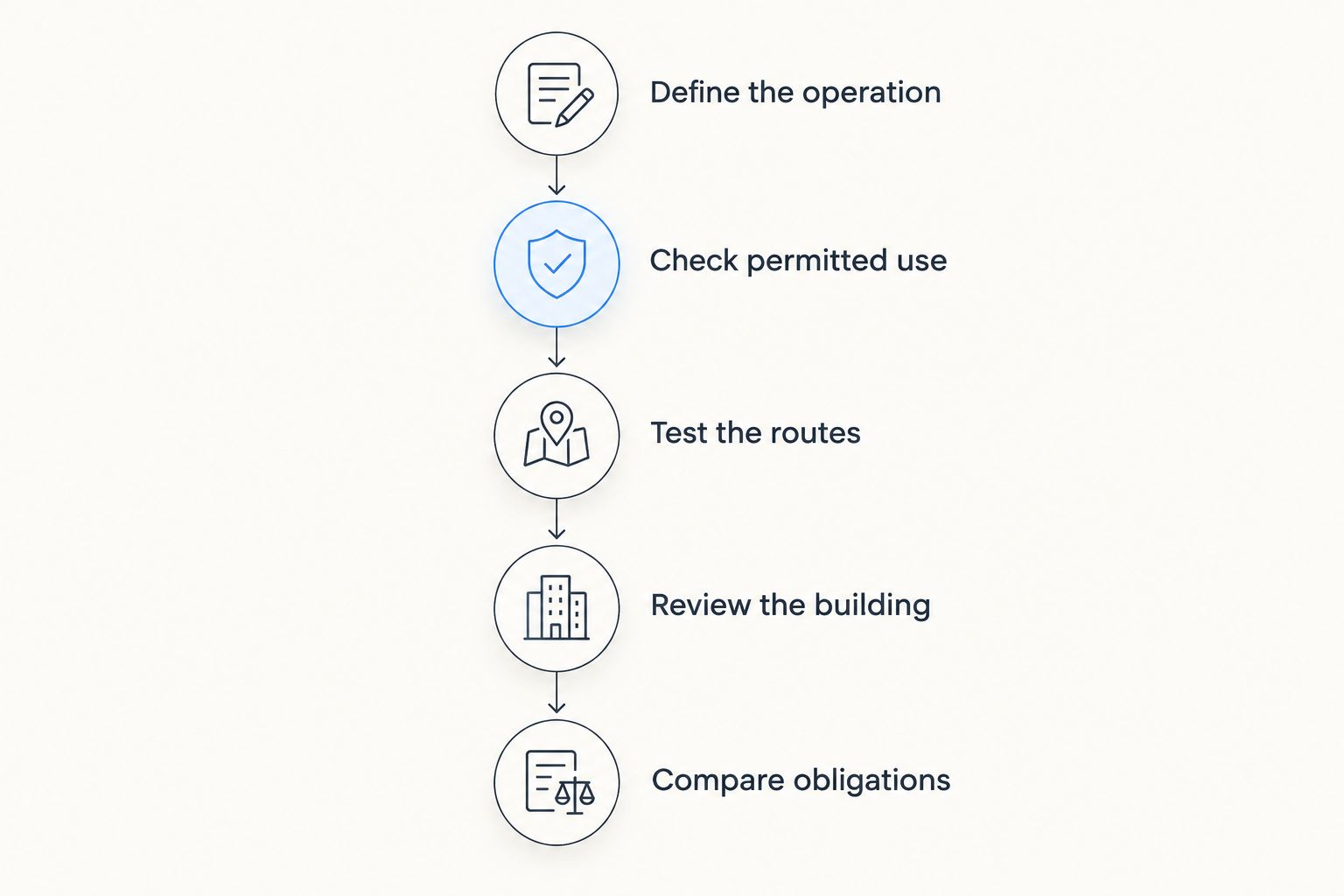
Use this sequence for your 2026 leasing search or listing preparation. It prevents the city comparison from becoming a substitute for property-level review.
- Define the operation. Write down the activity, equipment, loading pattern, employees, vehicles, and storage needs.
- Check permitted use. Request relevant use and occupancy records, then confirm the proposed operation with the jurisdiction.
- Test the routes. Complete 3 route checks: the truck approach, the employee commute, and the principal customer or delivery trip.
- Review the building. Use 2 separate reviews: physical suitability first, then lease obligations. Keep unresolved issues in writing.
- Compare obligations. Prepare 1 written comparison covering repairs, expenses, improvements, insurance, and end-of-term responsibilities.
The same sequence works for an owner preparing a listing. Assemble the information prospects need before tours begin, and distinguish documented facts from matters that still require confirmation.
A clear property file also helps you explain why the building fits a particular prospect. Include available plans, relevant approvals, building information, and proposed lease responsibilities without overstating what any document proves.
Discuss your industrial leasing plan
Review your property, intended tenant, and leasing priorities in Ontario and the surrounding Inland Empire.
Which Inland Empire city should you choose?
Start with Ontario if you have no fixed location requirement. Move Fontana, Rialto, Riverside, or San Bernardino ahead of it when a specific corridor, customer base, or employee location gives you a concrete reason.
For owners planning a 2026 lease, reverse the question: which business fits the property you already own? Position the listing around documented strengths, explain the constraints, and make the proposed responsibilities clear. A well-matched inquiry is more useful than interest based on an inaccurate description.
FAQ
What's the best Inland Empire city for industrial space for lease?
Ontario, California, is this guide's default starting point because it brings I-10, I-15, and Ontario International Airport into the location review. Choose another city first when its routes or customer access better match your operation.
Is Fontana better than Ontario for an industrial lease?
Fontana is the more focused starting point when I-15 drives your search. Ontario is this guide's broader default, but the specific address, permitted use, and building determine the final choice.
Should I search Rialto if I need Route 210 access?
Yes, Rialto belongs on a Route 210-focused shortlist. Check the actual route between the property and your destinations rather than treating every Rialto address as equivalent.
When does Riverside make more sense than Ontario?
Riverside makes more sense when Riverside customers, employees, or existing operations are central to the business. Test that local benefit against the building's loading, power, access, and permitted use.
Can I use an industrial property as a truck yard?
An industrial property is not automatically approved or physically suitable for truck-yard use. Confirm the proposed activity, exterior-use rights, access, circulation, and lease restrictions for the specific address.
What should a landlord prepare before listing an industrial building?
Prepare available building plans, relevant use records, property details, and proposed lease responsibilities. Separate verified information from items that a prospect or the jurisdiction must still confirm.
How should I compare industrial lease proposals?
Compare the full obligations, including repairs, operating expenses, insurance, improvements, and restoration. Use the same operating requirements for each property so a location advantage does not hide a building mismatch.
One last thing
The route review should end at the loading position, not the freeway exit. A map can show a nearby interchange without showing whether the vehicle can enter, turn, wait, and unload as intended.
Before choosing a property in 2026, walk that final approach with the operator's requirements in hand. For a landlord, documenting that same approach turns a general location claim into information a serious prospect can use.