Best overall: Ontario, California. Best for suburban retail screening: Rancho Cucamonga. Best for industrial-focused screening: Fontana. This 2026 guide ranks the best Inland Empire cities for NNN properties for sale by investment use case, then explains what owners and buyers should check before choosing a property.
- Ontario leads this shortlist of the best Inland Empire cities for NNN properties for sale because of its transportation connections.
- Rancho Cucamonga suits suburban retail screening; Fontana suits industrial-focused screening.
- Riverside suits office and service-property searches; Redlands suits downtown commercial screening.
- For triple-net investment properties, read the lease before treating the income as passive.
Why this matters
A city helps you narrow your search. It does not tell you whether the tenant pays reliably, the roof needs replacement, or the lease leaves expensive obligations with the owner.
Javier Brown is a fit for Inland Empire owners and investors who want commercial brokerage across industrial, office, retail, and land properties. Start with Javier Brown when you need to connect a property decision with a sale or leasing strategy.
For sellers, the same logic works in reverse: explain why your specific property fits an investor's needs. A city name cannot replace a clear lease summary and documented expenses.
What makes the best city for an NNN investment?
Use these criteria to screen your 2026 search before comparing individual listings:
- Tenant fit: Does the location support the tenant's actual business, rather than merely its current occupancy?
- Replacement use: If the tenant leaves, what other lawful uses fit the building, parking, access, and layout?
- Lease responsibility: Who pays taxes, insurance, maintenance, structural repairs, and replacements? Read the allocation, not just the NNN label.
- Access and setting: Evaluate customer access for retail and offices, and truck access for industrial buildings.
- Income durability: Review payment history, remaining lease term, options, guarantees, and any termination rights.
- Owner exit: Decide whether the likely next buyer wants an investment, a vacant building, or space for a business.
NNN commonly refers to 3 expense categories: property taxes, insurance, and maintenance. That shorthand does not establish that every repair or capital expense belongs to the tenant.
Inland Empire NNN cities at a glance
This 2026 ranking is a search order by use case, not a ranking of investment returns. An individual property's lease and condition can reverse the order.
| City | Best for | Standout screening advantage | Key limitation |
|---|---|---|---|
| Ontario | Overall starting point | Airport and Interstate 10/15 connections | Transportation access does not establish tenant quality |
| Rancho Cucamonga | Suburban retail screening | A focused setting for evaluating customer-facing locations | Visibility alone does not prove access or business performance |
| Fontana | Industrial-focused screening | Interstate 10/15 access to investigate | Truck access and permitted use require parcel-level checks |
| Riverside | Office and service-property searches | County-seat setting for location-specific screening | Specialized office layouts can restrict replacement uses |
| Redlands | Downtown commercial screening | A defined downtown context for smaller commercial properties | Older-building obligations need careful lease review |
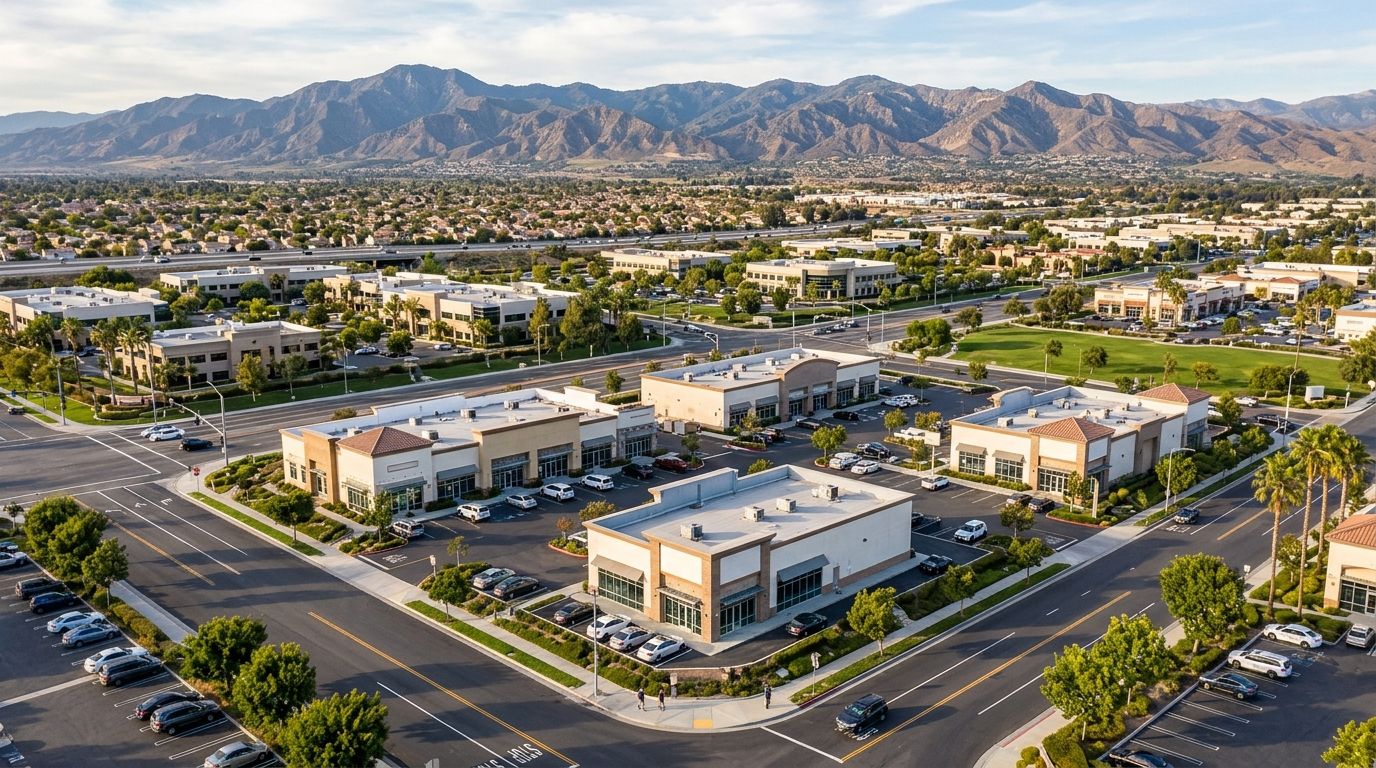
1. Ontario: best NNN city for an overall starting point
Ontario, California, is the default starting point when you have not settled on a property type. Ontario International Airport and the Interstate 10/15 corridors give you concrete transportation features to evaluate against a tenant's operations.
Do not turn that geography into an automatic investment endorsement. A building near a transportation corridor still needs suitable access, a workable layout, and a lease that protects the income you are buying.
Ontario pros:
- Airport proximity is a specific factor to investigate for relevant tenants.
- Interstate connections provide a practical starting point for access checks.
- The city supports a location-first search before you commit to one property format.
Ontario cons:
- A familiar city name does not resolve tenant credit risk.
- Nearby freeway access does not establish legal or practical truck access.
Best for: Buyers building an initial shortlist and owners preparing to explain a property's transportation-related appeal.
Ask whether the tenant needs this particular site. If the location is interchangeable with many alternatives, investigate what keeps the tenant there beyond the current lease.
Verdict: Buy only when the Ontario property's lease, tenant, and physical condition support the investment independently of the city name.
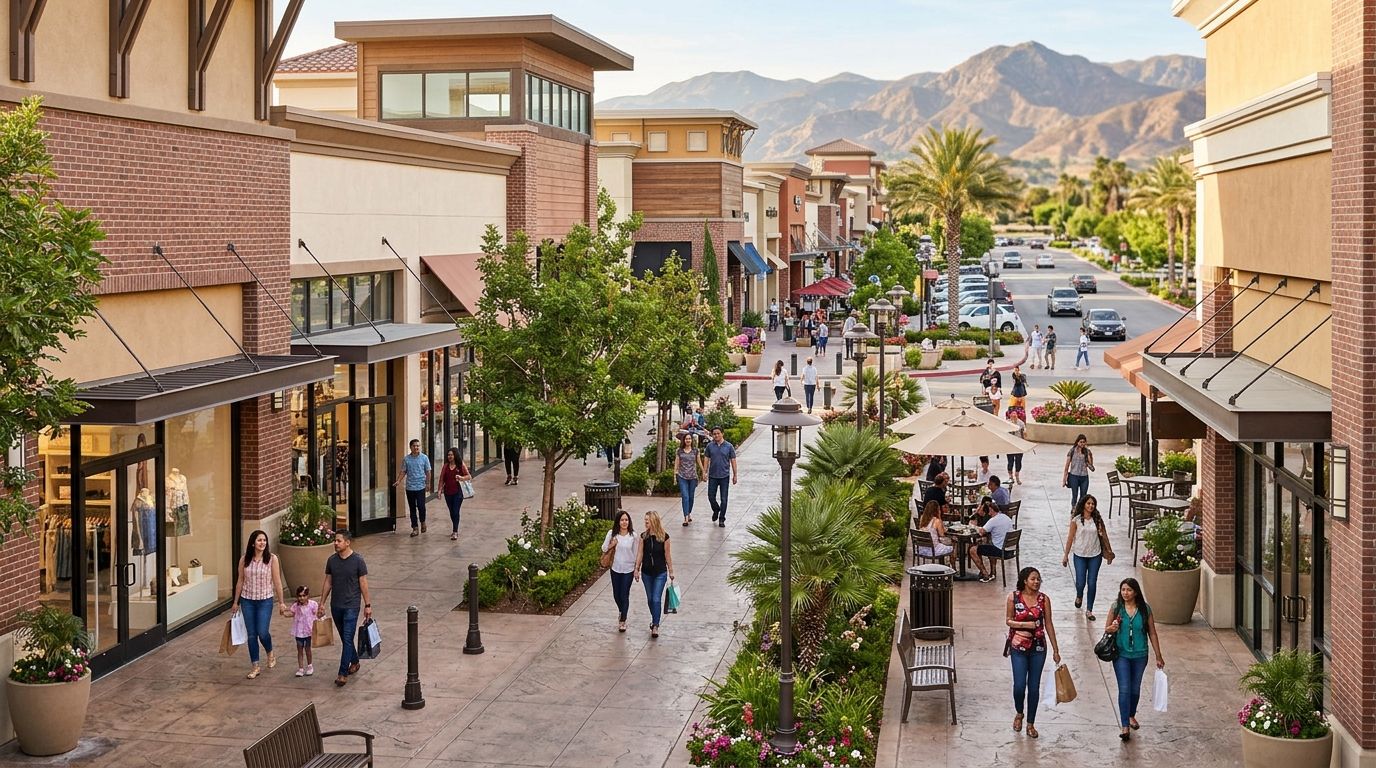
2. Rancho Cucamonga: best NNN city for suburban retail screening
Choose Rancho Cucamonga as a focused search area when you want a customer-facing retail investment. Screen the actual shopping trip: driveway entry, turning movements, parking, signage rights, and neighboring uses.
A visible storefront is not the same as an easy-to-use storefront. Visit from the directions customers would approach, then compare what you see with the access and signage rights documented for the property.
Rancho Cucamonga pros:
- A city-focused search lets you compare customer access consistently.
- Retail locations can be assessed against a clear tenant business model.
- Parking and signage provide tangible issues to resolve before commitment.
Rancho Cucamonga cons:
- A recognizable tenant name does not identify the actual lease guarantor.
- Shared parking or access arrangements add documents to review.
Best for: Investors seeking suburban retail exposure who are prepared to examine site usability alongside lease terms.
For a seller, organize reciprocal access agreements, signage provisions, and any shared-property obligations. These documents help a buyer understand what comes with the rent stream and what remains an owner responsibility.
Verdict: Buy when the tenant's business fits the site and the recorded access rights match the property's apparent convenience.
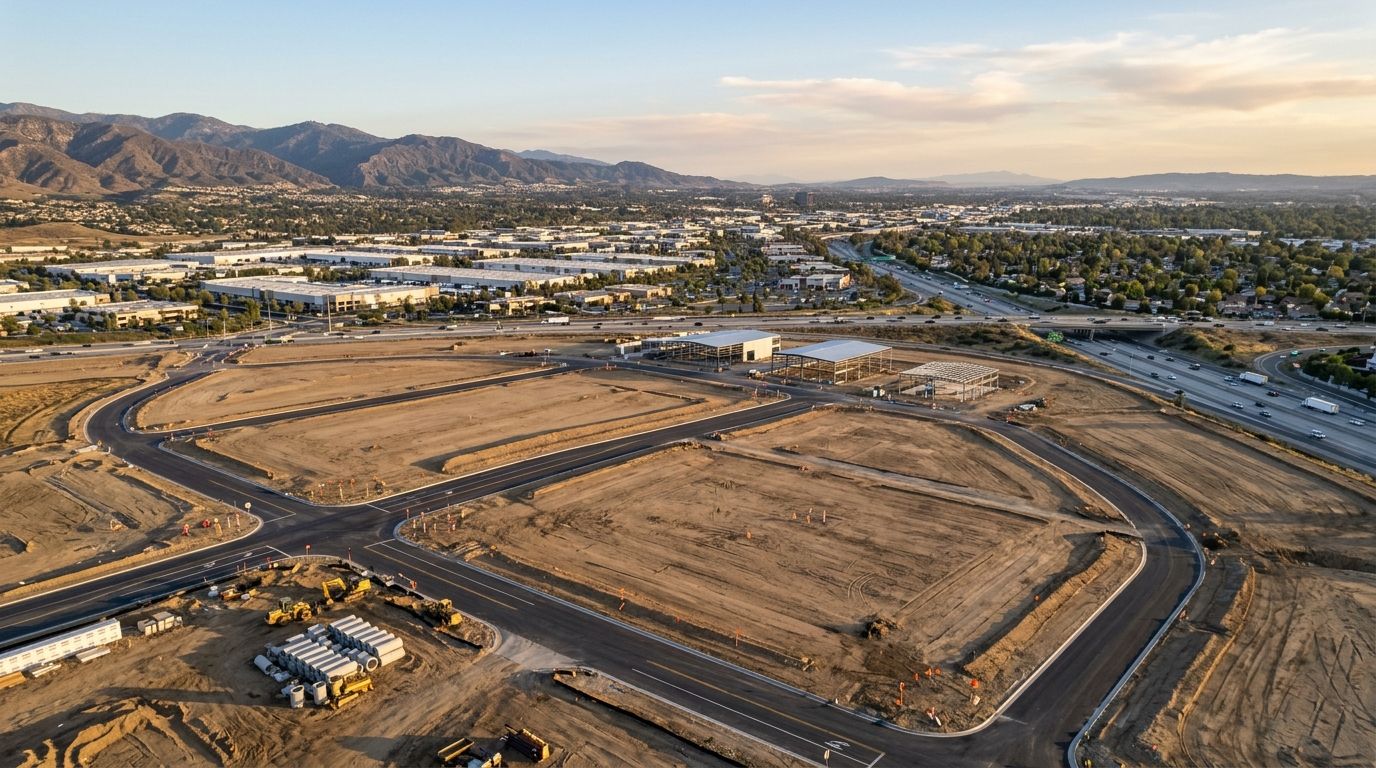
3. Fontana: best NNN city for industrial-focused screening
Fontana belongs on an industrial buyer's shortlist because its Interstate 10/15 connections provide a transportation context to investigate. The important next step is checking the route between the freeway and the property—not stopping at a map pin.
Match the building to the tenant's operations. Loading configuration, power, parking, outdoor activity, and permitted use deserve separate checks; an industrial address does not answer those questions.
Fontana pros:
- Freeway connections give you a concrete access question to investigate.
- Industrial screening can focus on operational fit rather than storefront appeal.
- Building functionality provides a practical basis for comparing replacement uses.
Fontana cons:
- Truck routing and site circulation need property-specific verification.
- Tenant alterations can leave restoration or compliance questions at lease end.
Best for: Buyers evaluating an industrial tenant's occupancy needs and the building's usefulness after that tenant leaves.
Industrial sellers should identify which improvements belong to the tenant and what happens when the lease ends. Equipment removal, restoration language, and environmental responsibilities deserve attention before buyer diligence begins.
Verdict: Buy when the use is permitted, access works, and the lease clearly assigns maintenance and end-of-term obligations.
4. Riverside: best NNN city for office and service-property searches
Riverside is Riverside County's seat, making it a useful place to investigate office and service-property locations tied to a specific customer or professional network. Confirm the tenant's actual location needs rather than assuming the county-seat setting creates demand for every building.
For an office investment, look beyond occupied square footage. Examine how easily another user could work with the existing rooms, entrances, parking, and building systems.
Riverside pros:
- The county-seat setting gives you a specific location factor to investigate.
- Office and service uses allow screening around customer access and workplace needs.
- A defined tenant use helps you test whether the layout supports continued occupancy.
Riverside cons:
- Specialized interiors can require changes for a replacement tenant.
- A gross, modified-gross, or NNN lease allocates expenses differently; the building type proves nothing.
Best for: Investors who understand the tenant's office or service business and want to evaluate location dependence.
Ask who owns specialized improvements and whether removal is required. A fitted-out space has value only when those improvements serve the next user or the continuing tenant.
Verdict: Buy when the tenant's location needs are clear and the building has a credible alternative use.
5. Redlands: best NNN city for downtown commercial screening
Redlands suits buyers who want to investigate a defined downtown commercial setting rather than begin with freeway-oriented industrial property. Focus on the individual building, customer access, and the tenant's reasons for choosing that location.
If you consider an older building, separate appearance from maintenance responsibility. Read the lease for roof, structure, plumbing, electrical systems, and alterations instead of assuming the tenant covers everything.
Redlands pros:
- A downtown-focused search provides a distinct alternative to corridor-based screening.
- Walk the surrounding blocks to assess how the tenant fits the setting.
- Building-level review can expose obligations hidden by a simple rent summary.
Redlands cons:
- Older buildings require careful condition and repair-allocation review.
- Parking, access, and alteration restrictions need individual verification.
Best for: Buyers willing to examine downtown commercial buildings closely rather than rely on a standardized investment description.
Sellers should document completed work without describing every improvement as the tenant's responsibility. The signed lease controls the allocation, and supporting records help explain the property's condition.
Verdict: Buy when the building condition, permitted use, and lease obligations are clear—not because the setting looks appealing.
How the cities are ranked
Ontario takes the default position because its airport and freeway connections offer a clear starting point across investment searches. The remaining cities each receive a different screening role: suburban retail, industrial, office and service uses, or downtown commercial property.
This is not a claim that Ontario produces better returns. For a 2026 purchase, compare actual lease obligations, property condition, tenant exposure, and replacement uses before choosing between addresses.
Turn the shortlist into a property decision
Use the same sequence whether you are buying an NNN investment or preparing one for sale. Javier Brown's commercial brokerage covers sales and leasing, so the useful question is not simply where to look—it is whether selling, retaining, or leasing fits your property decision.
Read the lease
Collect the signed lease, amendments, options, guarantees, and any notices. Confirm the legal tenant entity and identify termination, assignment, renewal, and purchase rights before treating the income as dependable.
Verify the income
Request the last 12 months of payment records as an initial review, then expand the period when the tenancy history requires it. Reconcile those records with the lease and separate contractual rent from reimbursements and unresolved charges.
Inspect the property
Have qualified professionals assess the building and relevant systems. Compare their findings with the lease's responsibility clauses; a tenant obligation is not proof that the work has been completed.
Test the exit
Consider what happens if the tenant renews, leaves, or defaults. Identify plausible replacement uses and check their legal and physical requirements before assuming the building is easy to lease again.
For a 2026 sale, organize this material before presenting the investment. A clear file lets buyers examine the income and obligations without relying on a listing's shorthand.
Discuss your property decision
Talk through selling, leasing, or evaluating an Inland Empire commercial property.
Which Inland Empire city should you choose?
Start with Ontario if you need a default search area. Choose Rancho Cucamonga for suburban retail screening, Fontana for industrial operations, Riverside for office and service uses, or Redlands for a downtown commercial search.
Then let the property overturn the ranking. A clearly documented lease in your second-choice city deserves attention before a poorly understood investment in your first-choice city.
FAQ
What's the best Inland Empire city for NNN investment properties?
Ontario, California, is this guide's default starting point because of its airport and Interstate 10/15 connections. The best individual investment still depends on the tenant, lease, building condition, and replacement uses.
Is Ontario better than Fontana for an industrial NNN investment?
Neither city wins without comparing the properties. Evaluate permitted use, truck routing, loading, tenant obligations, and the building's usefulness after the current lease ends.
Does an NNN lease mean the owner pays no expenses?
No. NNN commonly refers to taxes, insurance, and maintenance, but the signed lease determines the allocation and any exclusions. Structural repairs, replacements, and other obligations need explicit review.
Is a recognizable tenant brand enough to make an NNN property safe?
No. Identify the legal tenant and guarantor, then examine the lease and financial information available for those entities. A sign on the building does not establish who guarantees the rent.
What should an owner prepare before selling an NNN property?
Prepare the signed lease and amendments, payment records, expense information, and condition documents. Identify unresolved tenant issues and explain which obligations remain with the owner.
Can an office property have an NNN lease?
Yes. Office leases can allocate taxes, insurance, and maintenance to the tenant, but the allocation depends on the agreement. Do not infer lease terms from the property type.
Should I sell my leased property or keep collecting rent?
Compare your ownership goals with the lease's risks and remaining obligations. Review tenant exposure, upcoming building work, financing, and your need for capital before choosing a sale or continued ownership.
One last thing
Read the renewal option before calling a lease attractive. The option's notice requirements, rent provisions, and conditions affect what happens after the initial term; a long-standing tenant and a signed option are not the same thing.
For your 2026 decision, bring Javier Brown the lease—not just the property address. The city starts the conversation; the agreement explains what you actually own.