
Homes.com is built around residential property searches, which makes it a useful starting point for homes rather than industrial premises. For Inland Empire warehouse listings, the next step is commercial representation or a commercial property marketplace—not another residential search. The best Homes.com alternative in 2026 is Javier Brown if you need help selling or leasing a warehouse; LoopNet if you want to browse commercial listings.
- For Homes.com alternatives, Inland Empire warehouse listings need commercial property criteria—not residential search filters.
- Javier Brown provides commercial brokerage for owners and investors in Ontario, California, and the surrounding Inland Empire.
- LoopNet and Crexi suit commercial property browsing; neither replaces property-specific verification or negotiated representation.
- Before listing a warehouse, decide whether your priority is a sale, a lease, or comparing both.
Why this matters
A warehouse listing has to answer questions a home listing does not: permitted use, loading, truck access, occupancy, and responsibility for operating expenses. Photos and an address are not enough. A prospective buyer or tenant needs to know whether the property fits the intended operation.
For owners in Ontario, California, and the surrounding Inland Empire, the choice is not simply which website to use in 2026. Choose representation for the transaction and a marketplace for exposure or research. Those are different jobs, and you can use both.
Homes.com alternatives at a glance
Start with the job you need done. A commercial agent, a commercial marketplace, and a residential portal are not interchangeable options.
| Option | Best for | Main function | Difference from Homes.com | Main limitation |
|---|---|---|---|---|
| Homes.com | Residential property research | Home-focused property search | The residential starting point in this comparison | Not the right starting point for a warehouse-specific assignment |
| Javier Brown | Inland Empire owners seeking commercial representation | Commercial real estate sales and leasing | A brokerage service rather than a residential search portal | Representation is not a substitute for legal, tax, engineering, or zoning advice |
| LoopNet | Browsing commercial properties | Commercial real estate listings | Commercial property search rather than home search | Listing information still needs property-specific verification |
| Crexi | Comparing commercial property opportunities | Commercial real estate marketplace | Commercial rather than residential property discovery | A marketplace does not settle transaction terms or verify operational suitability for you |
The practical distinction is responsibility. A portal helps you discover advertised properties; a representation agreement defines what a broker will do for your transaction. Ask about that scope before signing anything.
1. Javier Brown: best for Inland Empire warehouse representation
Javier Brown is a bilingual commercial real estate agent at MGR Real Estate serving owners and investors buying, selling, or leasing industrial properties and other commercial real estate. The service area includes Ontario, California, and surrounding Inland Empire cities. For a warehouse owner, this is a representation option—not a competing property-search app.
Where this option shines
- Owner-focused assignment: Commercial sales and leasing match the decision to sell a warehouse, find a tenant, or evaluate both paths.
- Relevant property scope: Industrial properties, truck yards, offices, retail, and land are within the stated brokerage focus.
- English and Spanish communication: Bilingual representation supports owners who prefer to discuss their transaction in either language.
- Local service area: The stated focus includes Ontario, California, and the surrounding Inland Empire.
Where this option falls short
- Brokerage does not replace an attorney's review of a purchase agreement or lease.
- An agent's involvement does not establish that a proposed warehouse or outdoor-storage use is permitted.
- If you only want to browse advertisements without discussing representation, a commercial marketplace fits that immediate task more directly.
Head-to-head: representation versus Homes.com
| Dimension | Commercial representation | Homes.com |
|---|---|---|
| Main purpose | Support a commercial sale or lease assignment | Residential property discovery |
| Warehouse-owner fit | Discuss the assignment, property, and transaction objectives | Research homes rather than structure a warehouse assignment |
| Relationship | Scope defined through the representation agreement | Website use is not itself a commercial representation agreement |
| Verification | Establish who will obtain and review property documents | Do not treat a residential listing as warehouse-use approval |
Best for: Inland Empire owners who need a commercial brokerage relationship rather than another search website.
Verdict: Buy the service only after agreeing on scope, responsibilities, and terms. Do not confuse choosing an agent with approving a specific marketing plan; discuss both.
2. LoopNet: best for browsing commercial warehouse listings
LoopNet is a commercial real estate listing platform. It is a more relevant browsing category than Homes.com when your search concerns industrial space rather than housing.
For an owner preparing a 2026 warehouse listing, commercial advertisements also provide a way to examine how other properties are presented. Separate asking terms from completed transaction evidence; an advertisement does not prove what a buyer or tenant ultimately accepted.
Where LoopNet shines
- Its commercial real estate focus matches the property category.
- You can use advertised properties to build a research shortlist.
- Listing descriptions can help you identify questions about loading, access, configuration, and occupancy.
Where LoopNet falls short
- An advertised asking term is not proof of a completed deal.
- A listing description does not establish zoning compliance or suitability for a particular business.
- Browsing does not give you a representative responsible for your negotiating position.
Head-to-head: LoopNet versus Homes.com
| Dimension | LoopNet | Homes.com |
|---|---|---|
| Primary category | Commercial real estate | Residential real estate |
| Warehouse research | Relevant category for industrial property discovery | Not the appropriate primary warehouse-search category |
| Transaction responsibility | Confirm representation separately from browsing | Confirm representation separately from browsing |
Best for: Buyers, tenants, and owners who want to research advertised commercial properties before discussing specific opportunities.
Verdict: Hold judgment on each property until the listing details and intended use are verified. A relevant search result is a lead, not a completed assessment.
3. Crexi: best for another commercial property research channel
Crexi is a commercial real estate marketplace. Use it as another place to research commercial opportunities, not as proof that a warehouse is suitable or that an asking term reflects market value.
Where Crexi shines
- Its commercial property focus fits a warehouse search better than a residential portal.
- It gives you another channel for reviewing advertised opportunities.
- It supports a research process that separates discovery from negotiation and due diligence.
Where Crexi falls short
- Marketplace information still needs confirmation with the responsible parties.
- An advertisement does not resolve access, permitted use, condition, or lease obligations.
- More listings do not automatically produce better comparable evidence for your property.
Head-to-head: Crexi versus Homes.com
| Dimension | Crexi | Homes.com |
|---|---|---|
| Primary category | Commercial real estate | Residential real estate |
| Practical role here | Research commercial opportunities | Research residential property |
| Due diligence | Required separately from listing discovery | Required separately from listing discovery |
Best for: Commercial buyers and tenants adding another marketplace to their research process.
Verdict: Hold any property decision until you verify the documents and operating requirements. Use the marketplace to find questions worth answering, not to skip those questions.
Why people switch from Homes.com for warehouse searches
The reason to switch is a change in property type and transaction requirements—not a claim that Homes.com performs poorly at residential search. A warehouse assignment calls for commercial information.
For your 2026 listing or search, these are concrete reasons to change channels:
- You need industrial details. Loading configuration, clear height, power, and truck circulation affect whether a building fits an operation.
- You need commercial lease analysis. Base rent alone does not describe expense obligations, repairs, improvements, or renewal rights.
- You need owner-specific decisions. Selling a vacant warehouse and selling one with a tenant require different document reviews and marketing discussions.
- You need permitted-use confirmation. A warehouse label does not establish approval for every industrial activity or for outdoor truck storage.
None of these reasons requires abandoning online research. They require putting commercial research and transaction support ahead of residential browsing.
Before choosing a channel, settle the owner decision
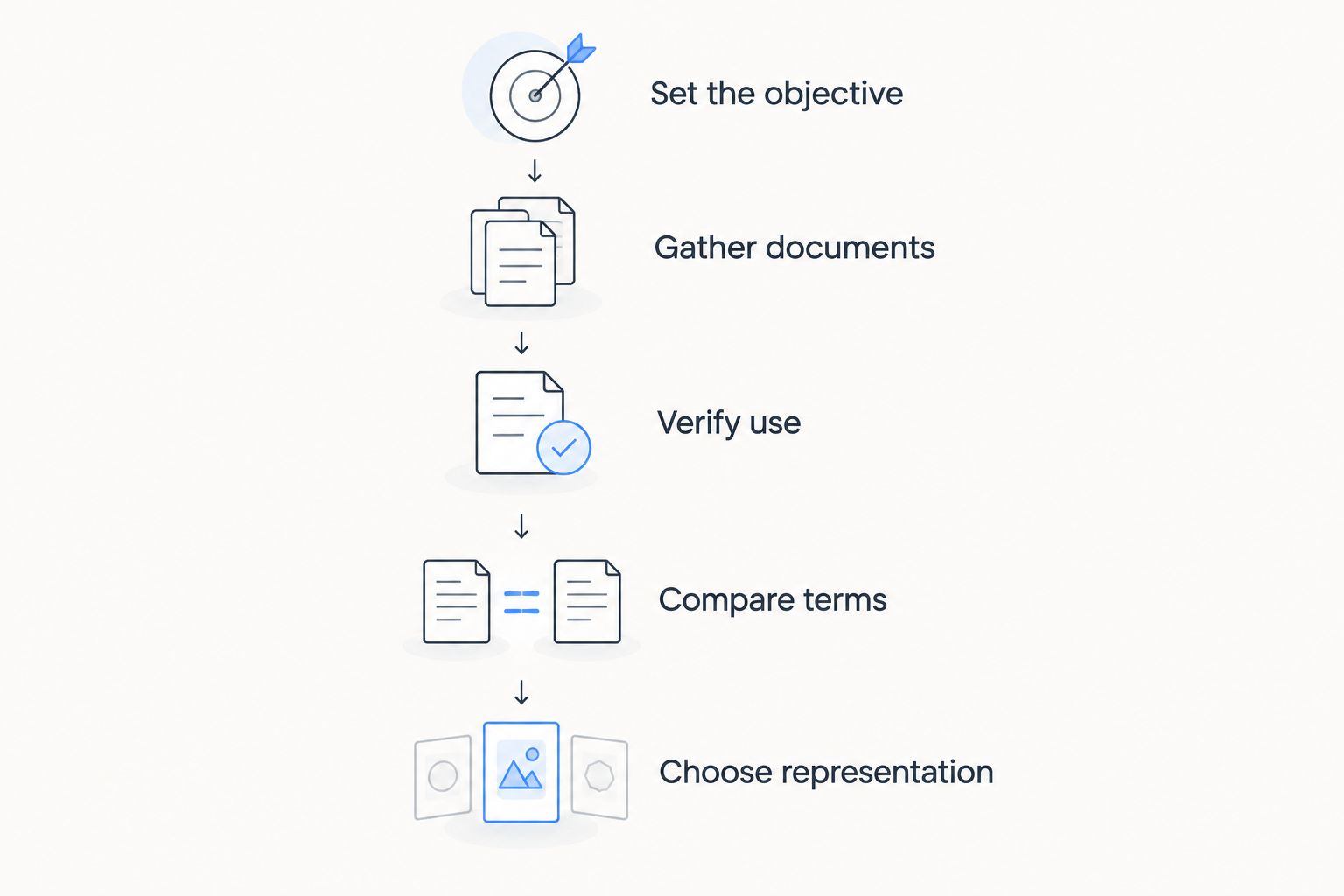
A stronger warehouse listing starts before publication. Work through the following sequence so the listing reflects the transaction you actually want.
Set the objective
Decide whether you want to sell, lease, or compare both. Write down the outcome you need and the obligations you are prepared to retain; a lease keeps you in the ownership role, while a sale transfers ownership subject to the transaction documents.
Gather documents
Assemble existing leases, amendments, available plans, operating expense records, and relevant property reports. Identify gaps rather than filling them with assumptions. For a leased property, the tenant's rights belong in the discussion before marketing promises are made.
Verify use
Describe the proposed activity precisely. Storage, distribution, manufacturing, and outdoor vehicle storage raise different questions, so confirm the applicable requirements with the responsible jurisdiction and qualified advisers.
Compare terms
For a sale, examine the proposed closing conditions and contingencies as well as the offer. For a lease, examine expense responsibility, improvements, repairs, increases, and renewal provisions—not just base rent.
Choose representation
Ask who handles inquiries, tours, offer review, and communication with other transaction participants. Put the agreed responsibilities in writing. Your 2026 marketing plan should follow the assignment, not substitute for it.
Evaluate the listing plan, not just the website
When interviewing a representative, ask how the proposed plan distinguishes your warehouse from superficially similar properties. A building with a tenant, a vacant owner-user opportunity, and a property requiring repairs should not be described as the same assignment.
Use these questions to keep the discussion concrete:
- Which property facts need verification before publication?
- What supports the proposed asking terms?
- How will existing tenant rights affect access and tours?
- Who will screen inquiries and record unanswered questions?
- How will competing offers or lease proposals be compared?
- What changes would trigger a review of the marketing plan?
A useful plan explains decisions, not just distribution. Posting a listing is one task; preparing defensible property information and evaluating responses are separate tasks.
Discuss your warehouse sale or lease
Talk through your Ontario, California, or Inland Empire commercial property assignment.
When staying with Homes.com is the right call
Stay with Homes.com when your assignment is residential property research. A home purchase, residential relocation search, and warehouse lease are different problems; the right platform follows the property type.
If you own both residential and commercial real estate, keep the research separate. Residential search can serve the residential decision while commercial marketplaces and representation support the warehouse assignment. You do not need one website to do every job.
FAQ
What's the best Homes.com alternative for Inland Empire warehouse listings?
Javier Brown is the representation option in this comparison for Inland Empire owners selling or leasing commercial property. LoopNet and Crexi are commercial marketplace options when your immediate goal is browsing advertised properties.
Is LoopNet better than Homes.com for finding warehouses?
LoopNet is the more relevant category because it focuses on commercial real estate, while Homes.com focuses on residential property. Verify each warehouse's details and intended use before making a decision.
Should I use Crexi or hire a commercial real estate agent?
Use Crexi for commercial property research and consider representation for the transaction itself. A marketplace and an agent perform different jobs, so the choice does not have to be either-or.
Can I advertise a warehouse before deciding whether to sell or lease?
Set your objective before approving the advertising. If you want to compare a sale with a lease, ask for separate terms and responsibilities so prospective buyers and tenants receive a clear message.
Does a warehouse listing mean truck parking is allowed?
No. Confirm the proposed truck parking or outdoor-storage use with the responsible jurisdiction, and review applicable property restrictions and lease terms before relying on it.
What should an Inland Empire warehouse owner prepare before listing?
Prepare existing leases and amendments, available plans, expense records, and relevant property reports. Identify which property statements need verification before the listing is published.
Is Ontario in this guide Ontario, California?
Yes. This guide concerns Ontario, California, and the surrounding Inland Empire—not Ontario, Canada.
One last thing
Before approving your 2026 warehouse listing, read it as the intended buyer or tenant. Can that person understand the transaction, the property's documented features, and the questions still requiring confirmation?
Remove any claim you cannot support. A shorter listing with clear facts is more useful than a longer one that leaves you explaining promises the property cannot meet.